6.1KVIEWS
20REPLIES
4APPRECIATES
08-03-2026LAST POST
Hello everyone,

has anyone ever installed a gauge that displays oil pressure? I'm curious if there's good kits that can help monitor oil pressure due to common rod bearing issue?!
Why not just spend that money towards changing the rod bearings? I know we're talking about a few hundred versus 2 thousand.

I imagine investing in the guage, it tells you that the rod bearings need to get changed, now you are out the cost of the guage and the bearings.
JsL wrote
Why not just spend that money towards changing the rod bearings? I know we're talking about a few hundred versus 2 thousand.

I imagine investing in the guage, it tells you that the rod bearings need to get changed, now you are out the cost of the guage and the bearings.
Good point but why not invest in gauge and know that rod bearings need to be replaced for the future reference? Just something useful to have on a vehicle with common rod bearing issue IMPO.
Oil pressure doesnt tell you how much wear your bearings have...
tdott wrote
Oil pressure doesnt tell you how much wear your bearings have...
Yes it does. Bearing weariness will vary the oil pressure
The s65 doesn't suffer from low oil pressure even with race slicks on high g corner. The rod bearing issue is the rod bearing issue. Spoke with many race team, data logged oil pressure and eventually just decide to replace the bearings. I'm at 106k miles and countless track events.
ThatWhiteM3 wrote
Hello everyone,

has anyone ever installed a gauge that displays oil pressure? I'm curious if there's good kits that can help monitor oil pressure due to common rod bearing issue?!
You can monitor it with various datalogging tools. Google the forums a bit, someone even posted their oil pressure data with 10w60 vs 5w50.

As others have said, the car doesn't suffer from oil pressure issues since it has a variable displacement pump. Running thinner oil won't drastically change the pressure since the pump will just compensate.

I do think an oil pressure gauge is a useful thing for any car that is driven hard.
ThatWhiteM3 wrote
Do you know by any chance where is it connected to and how was it installed? And if you replaced oil pressure switc by oil filter cap with this one did car threw any codes?
It is connected to the oil pressure sensor port using this, https://store.activeautowerke.com/collections/gauges/products/oil-distribution-block-for-gauges. The oil distribution block goes on the bottom and the OEM pressure sensor on top. No codes.
You don't have to use this oil block; there are others available.

Not the best pictures but they give you an idea. Let me know if you need more details.

Image hosted on: farm5.staticflickr.com

Image hosted on: farm5.staticflickr.com
KawBoy wrote
It is connected to the oil pressure sensor port using this, https://store.activeautowerke.com/collections/gauges/products/oil-distribution-block-for-gauges. The oil distribution block goes on the bottom and the OEM pressure sensor on top. No codes.
You don't have to use this oil block; there are others available.

Not the best pictures but they give you an idea. Let me know if you need more details.

Image hosted on: farm5.staticflickr.com

Image hosted on: farm5.staticflickr.com
Thanks for sharing! So pretty much u get that adapter which connects oem sensor as well as extra feed to ur own gauge? This is great! What made you want to install oil pressure gauge?
ThatWhiteM3 wrote
Thanks for sharing! So pretty much u get that adapter which connects oem sensor as well as extra feed to ur own gauge? This is great! What made you want to install oil pressure gauge?
Yes, that's all it takes.

I think every motor needs an oil pressure gauge as oil pressure is critical. It is a valuable tool.
ThatWhiteM3 wrote
Yes it does. Bearing weariness will vary the oil pressure
I don't think so. To look at a pressure gauge to know if you're seeing "extra wear" then you'd have to know what is normal pressure with normal bearings. Normal pressure will depend on oil temperature, RPM, oil viscosity (which itself depends on how long it's been in the engine), and whether or not the oil thermostat is open or closed. Then on top of that you've got a variable displacement pump that might compensate for some of those factors. I don't think this is a solvable problem to use oil pressure on the S65 to infer bearing wear.
Green-Eggs wrote
I don't think so. To look at a pressure gauge to know if you're seeing "extra wear" then you'd have to know what is normal pressure with normal bearings. Normal pressure will depend on oil temperature, RPM, oil viscosity (which itself depends on how long it's been in the engine), and whether or not the oil thermostat is open or closed. Then on top of that you've got a variable displacement pump that might compensate for some of those factors. I don't think this is a solvable problem to use oil pressure on the S65 to infer bearing wear.
It does vary like you said based on rpm temp and other factors. But wat you do is find out for example pressure on normal cruising speed which will hold rpm in place. For example at fixed 60 mph in 6th gear would be 80psi and that would keep rpm at 3000rpm (just an example). Now u know what it is at that speed and that rpm. If there's a weariness then at the same speed and rpm pressure would be different.
ThatWhiteM3 wrote
It does vary like you said based on rpm temp and other factors. But wat you do is find out for example pressure on normal cruising speed which will hold rpm in place. For example at fixed 60 mph in 6th gear would be 80psi and that would keep rpm at 3000rpm (just an example). Now u know what it is at that speed and that rpm. If there's a weariness then at the same speed and rpm pressure would be different.
I think there are many things wrong with this example.

At a constant RPM and constant load (your example above), after a few seconds the variable displacement pump will intentionally lower the pressure. So that example isn't going to work.

You would also need to know how much pressure to look for. If it were as little 1-2 PSI drop, you'll never know if it's due to worn bearings or not. During the BE Bearings test, we saw the increased clearance bearings dropped oil pressure only by 1-2 PSI. So I don't think this method is going to work either.

The oil viscosity changes at different heat ranges, and this is going to affect oil pressure. If you haven't done so, go look up the BE Bearings tests posted by Auto Talent on this forum. The oil viscosity also changes with age (miles on the oil). You would need to memorize how the oil behaves under all the heat ranges, how it behaves with increased miles, be looking for as little as 1-2 PSI difference, and make sure you check your readings before the variable displacement pump lowers the pressure on its own.

Like I said earlier, I don't think this is a solvable problem to just look at oil pressure and deduce if you have excessive bearing wear.
ThatWhiteM3 wrote
It does vary like you said based on rpm temp and other factors. But wat you do is find out for example pressure on normal cruising speed which will hold rpm in place. For example at fixed 60 mph in 6th gear would be 80psi and that would keep rpm at 3000rpm (just an example). Now u know what it is at that speed and that rpm. If there's a weariness then at the same speed and rpm pressure would be different.
You are correct.

You can easily establish a baseline from a healthy motor and from that point on look for oil pressure variations at various RPM. Note that oil needs to be at optimal working temperature (ideally 100C/212F) for this to work.

Even though more/less bearing clearance will show up on your oil pressure gauge, usually the difference is too small to be noticed, unless the change is big enough or you have a very accurate gauge. But it should work for your example.

I have my oil gauge alarms set to 2.8BAR (low pressure warning) and 6.2BAR (high pressure warning). It works for me. Have one; you'll like it.
Bumping this up, I'm installing an oil pressure gauge, plan on using the bimmerworld distribution block https://www.bimmerworld.com/Gauges-Data-Acquisition/Data_Gauge_Accessories/BimmerWorld-Oil-Distribution-Sending-Block.html to add the second sender. I thought about just splicing into the factory sender because they're both electronic but don't know if the values are consistent between both the senders. Plus I know it would be better to have two independent readings Incase one sender went bad. Just curious if anyone has any wisdom regarding this or can recommend a different way of install. Thanks.
im curious too, because main bearing failure is a nightmare in every point of view
SAMM3Y wrote
Bumping this up, I'm installing an oil pressure gauge, plan on using the bimmerworld distribution block https://www.bimmerworld.com/Gauges-Data-Acquisition/Data_Gauge_Accessories/BimmerWorld-Oil-Distribution-Sending-Block.html to add the second sender. I thought about just splicing into the factory sender because they're both electronic but don't know if the values are consistent between both the senders. Plus I know it would be better to have two independent readings Incase one sender went bad. Just curious if anyone has any wisdom regarding this or can recommend a different way of install. Thanks.
I know it's been a while, but any chance you installed this oil distribution block? Curious if you have install tips and if you think it worked well. Thanks!
pirategenes wrote
I know it's been a while, but any chance you installed this oil distribution block? Curious if you have install tips and if you think it worked well. Thanks!
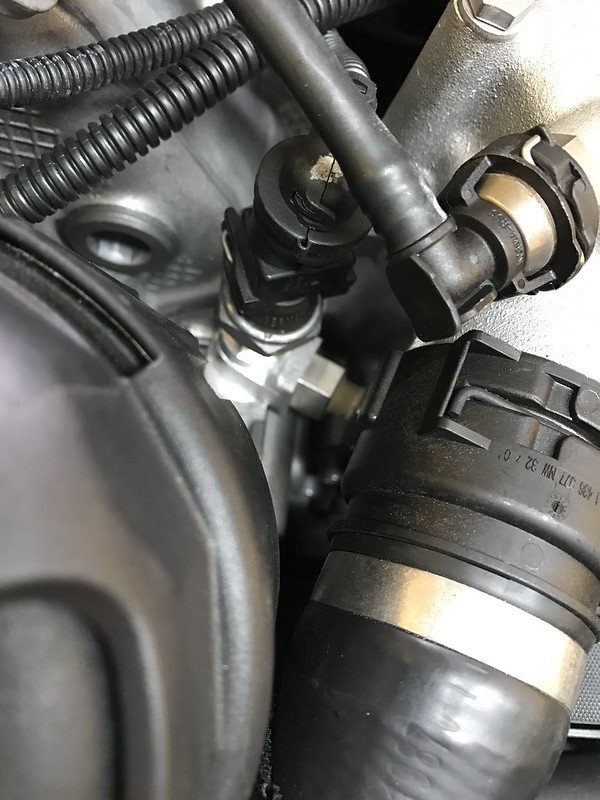
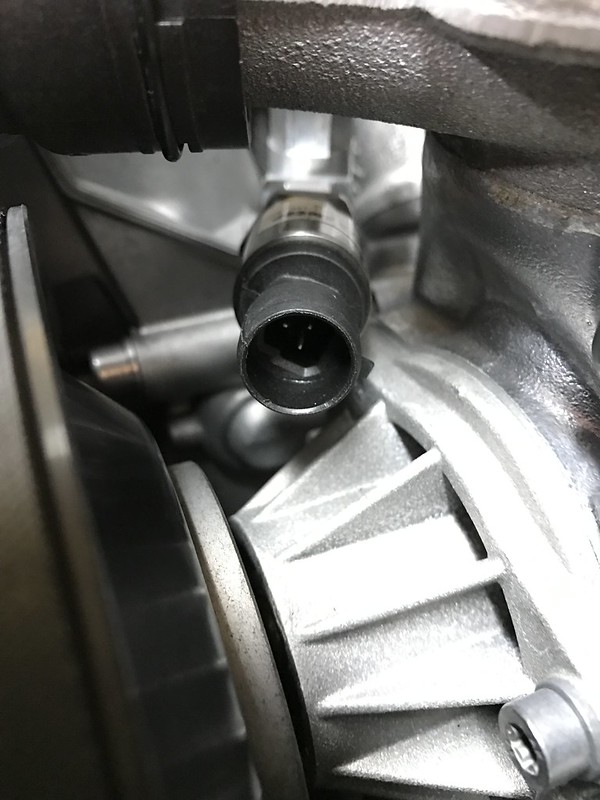
I did this with my new build. I have the BW Oil Distribution Block, Lowdollar Motorsports Pressure Sensor and harness, and AEM Oil Pressure Gauge.

The aftermarket pressure sensor will fit right behind the water pump pulley, no worries there. You will need to clearance the plug of the OEM dummy switch to ensure it fits.

Rubin
Attached imageAttached image
former 240 s14 wrote
I did this with my new build. I have the BW Oil Distribution Block, Lowdollar Motorsports Pressure Sensor and harness, and AIM Oil Pressure Gauge.

The aftermarket pressure sensor will fit right behind the water pump pulley, no worries there. You will need to clearance the plug of the OEM dummy switch to ensure it fits.

Rubin
Awesome - thanks for verifying!