

137.8KVIEWS
468REPLIES
298APPRECIATES
05-11-2025LAST POST









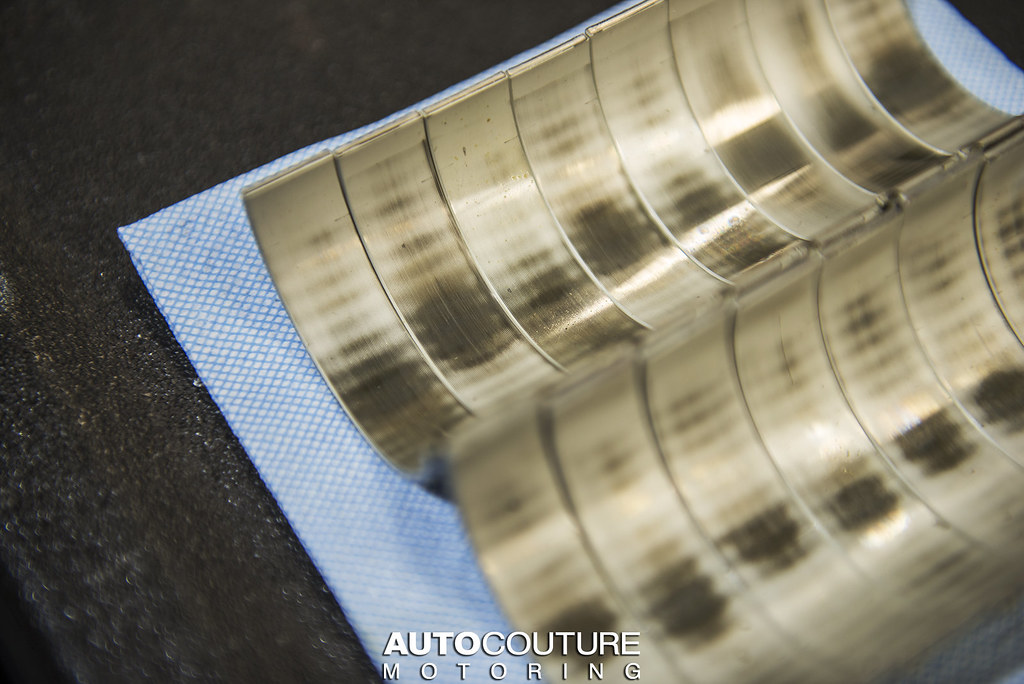
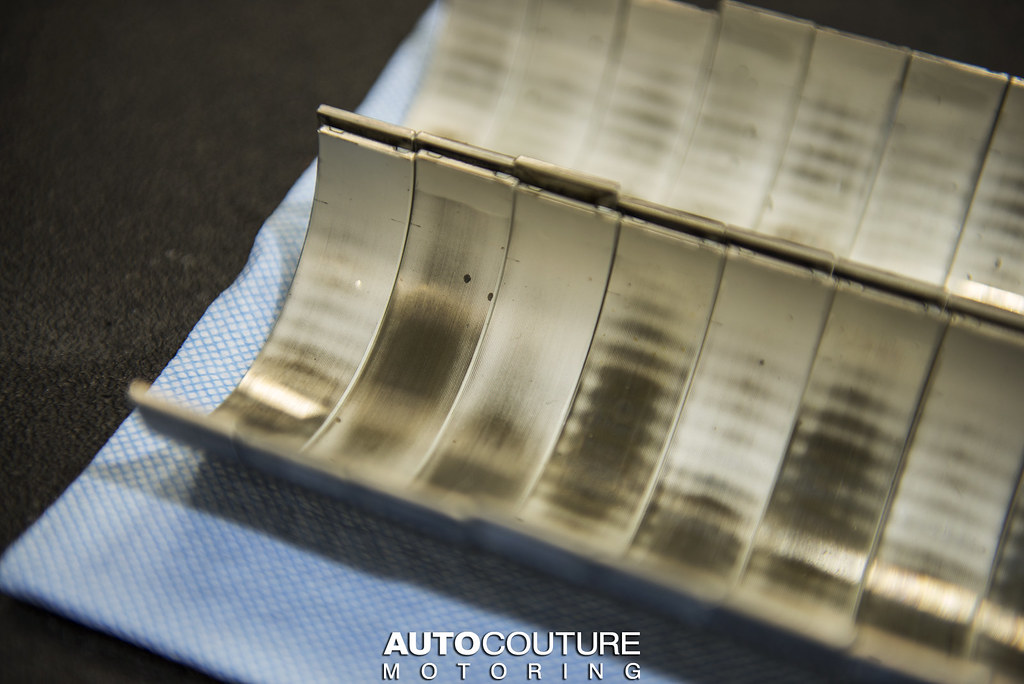


Great work Guys ! I just hit 80,000 miles would like to get this done plus the motor mounts.
WixxM3 wroteThanks! Right on, let's do it.Great work Guys ! I just hit 80,000 miles would like to get this done plus the motor mounts.
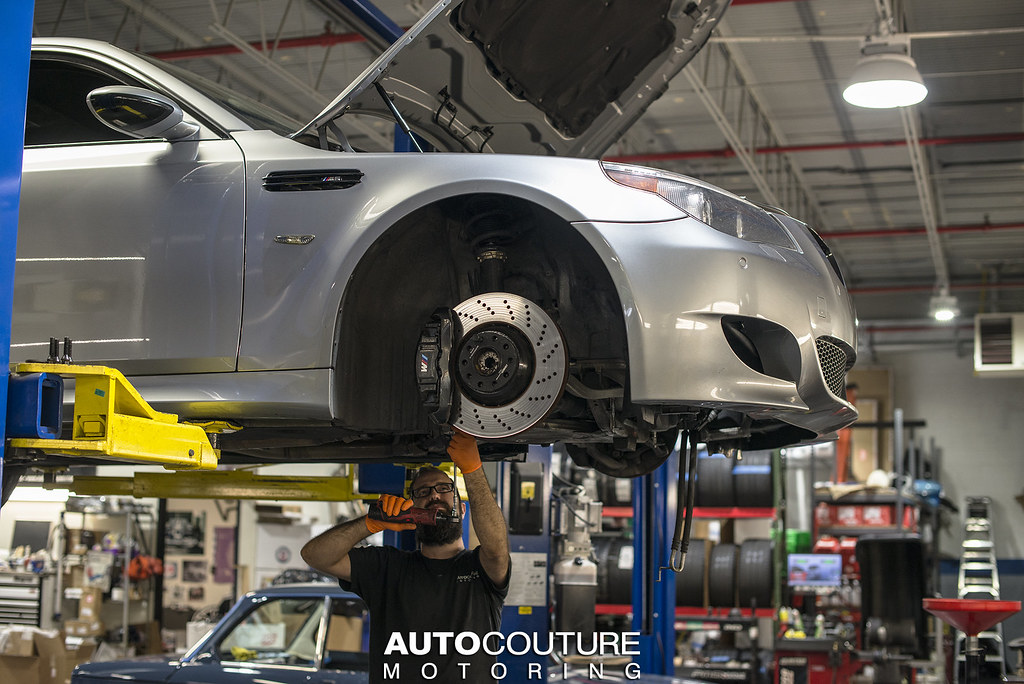


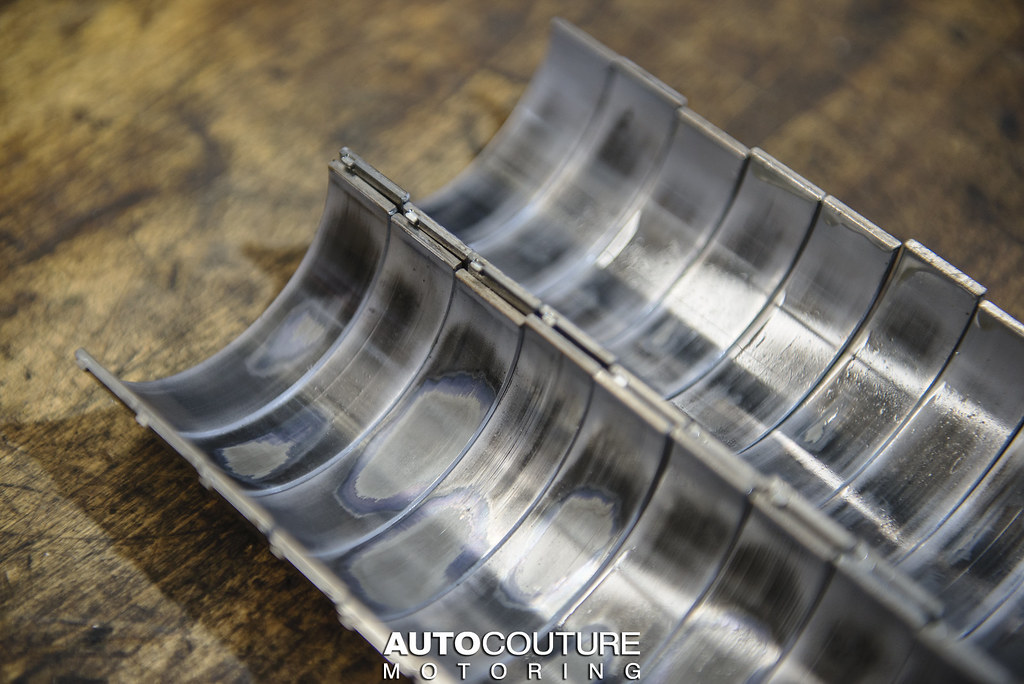








How long does it take to have it completed?
Would I be able to make a day trip out of it?
I'm in Maryland. Thanks
Would I be able to make a day trip out of it?
I'm in Maryland. Thanks
peterc05 wroteHey sent you a PM, thanks!How long does it take to have it completed?
Would I be able to make a day trip out of it?
I'm in Maryland. Thanks


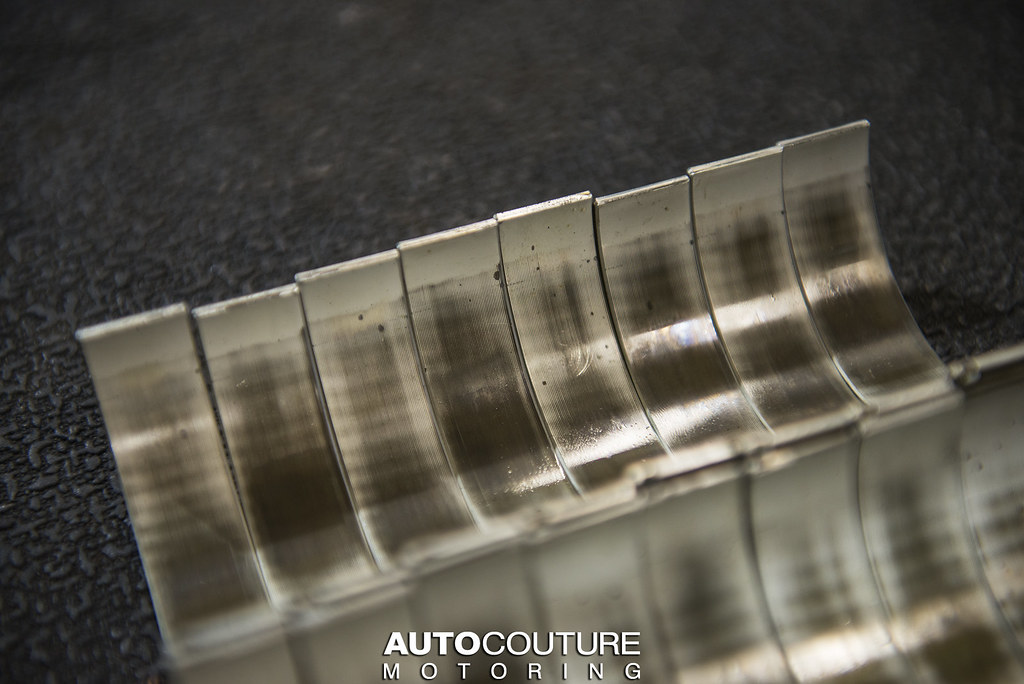


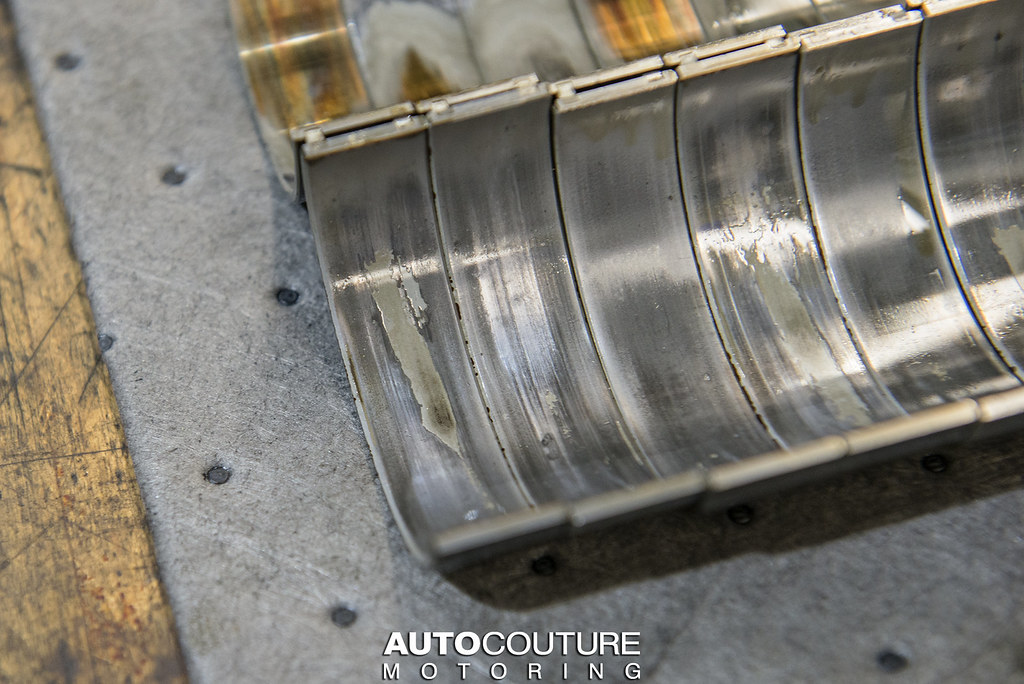


Matt@AUTOcouture wroteI can sleep in peace now lol. But thank you ACM for the rod bearing replacement. This shop will be my new home see you guys soon.Thanks! Right on, let's do it.
Firstly thanks for all the photos you've posted here Matt, very useful  , I'm looking through them all in a data file I'm building (I've already gone through the rod bearing condition thread).
1 thing though regarding a comment here and earlier.......
So the wear on nearly all S65 bearings is abnormal, and yes it's worthy of 'people freaking out about it' , not just the pattern of wear.
Most other road engines do not show the amount of wear that the S65's do (assuming they've been looked after properly of course).
You yourself mentioned the WPC shells you pulled after 25k on a supercharged car which came out looking 'barely worn', that is what they're supposed to look like.
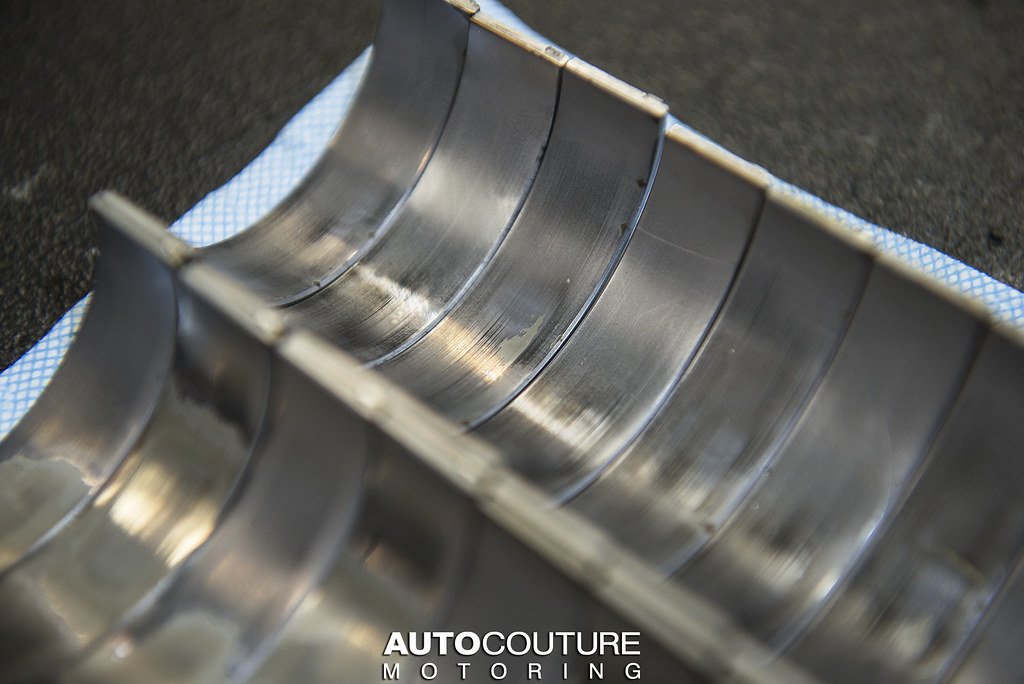
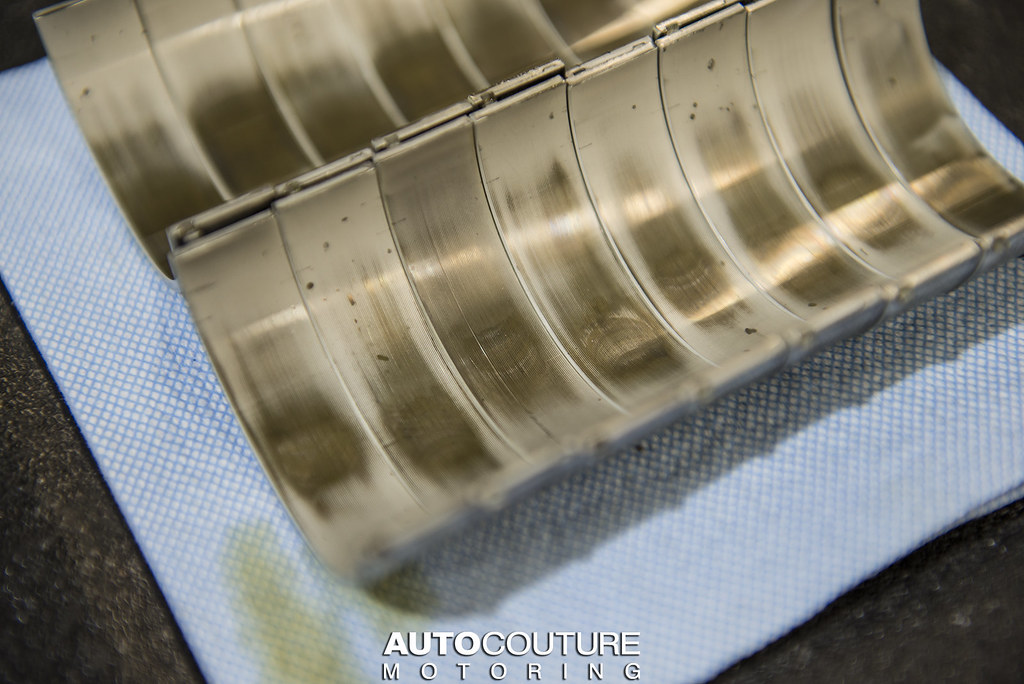
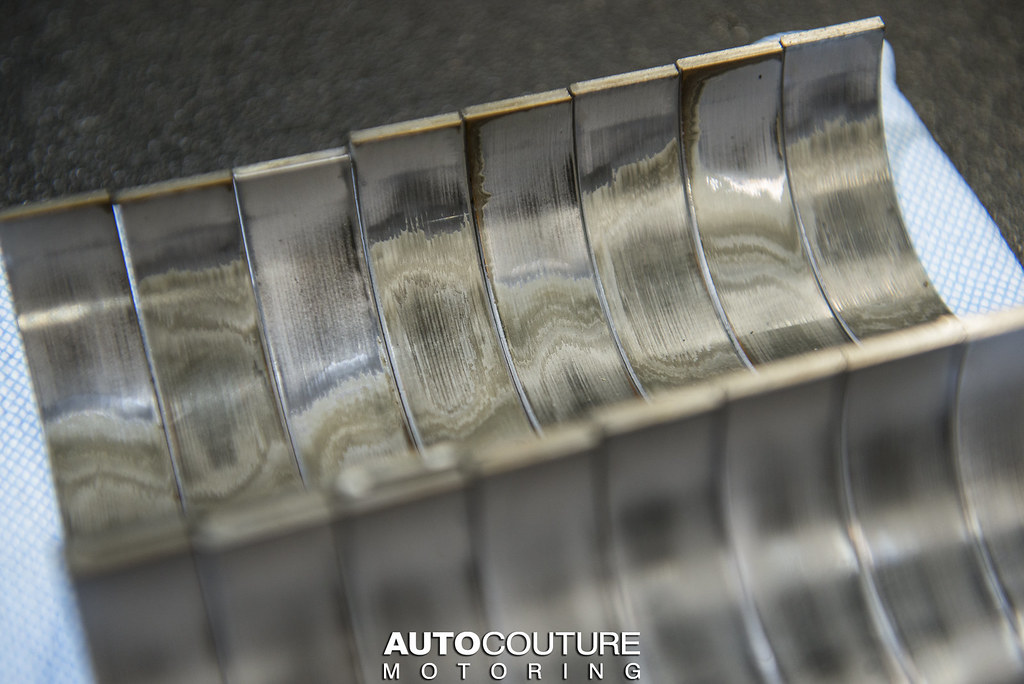
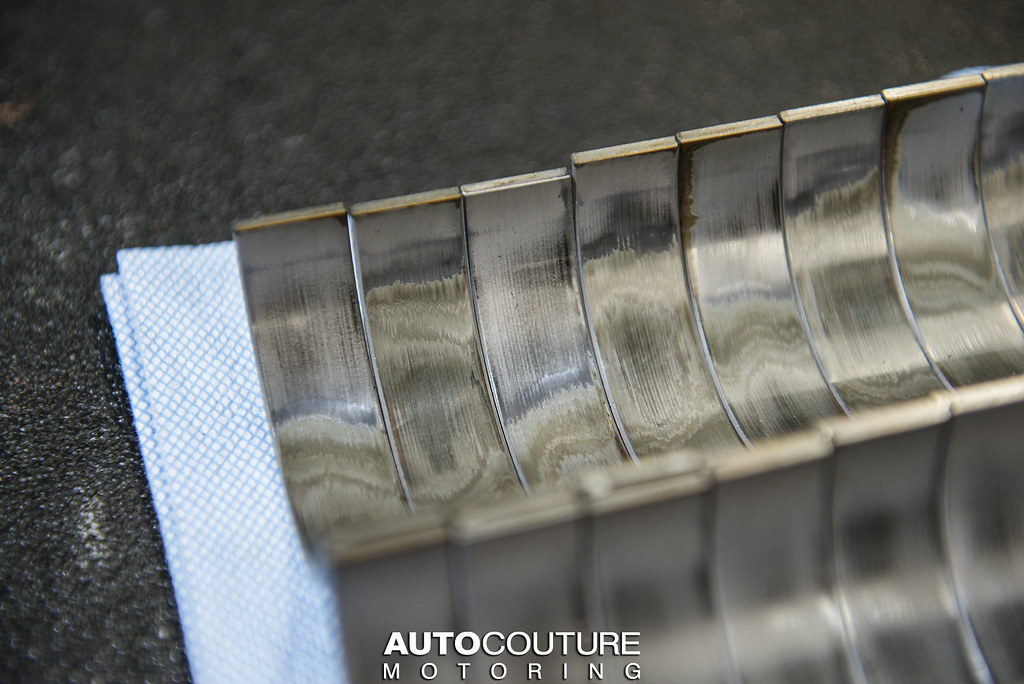
The wear in the above LCI bearings is not what used bearings are supposed to look like either (outside of the S65), although they're not worn terribly (appears these bearings generally fair better than the earlier ones), the wear has worn out the micro grooves in the top layer (see photo below), reducing oil retention and slightly altering the eccentricity of the bearing, which I'm sure you'll agree won't positively affect the hydrodynamic oil film?
Would the LCI bearings with such wear have been able to carry on for many 1000s of miles afterwards? I don't know (maybe you have some thoughts on that?)[edit](I finally come across this post which sort of answers that), but it's not a good thing to compromise the oil film on a highly stressed engine, and I expect that's why you change them too.
Btw, consistent wear is more common on the LCI shells than the earlier ones (no idea why), it's not likely down to the car being cared for though.
Do you have photos of those WPC bearings from the supercharged car? I'd be really interested to see them, trying to find photos of good condition used S65 rod bearings is like gold dust!
Also, it's interesting that you use WPC OEM shells, seeing as their clearances are rather on the snug side (even the LCI ones), but the WPC treatment opens up the clearance very slightly right? (which is a good thing!). And might be at least 1 reason why the supercharged shells looked so good. Along with the following I guess?.....
we stopped using all other bearing options, as well as the OEM bolts, due to the relatively high level of scatter preload experienced with the stretch to yield design.
Sounds interesting, what do you mean by 'scatter preload', inconsistent clamp loading? How did you find this out?
Photo courtesy of Ximain's post here
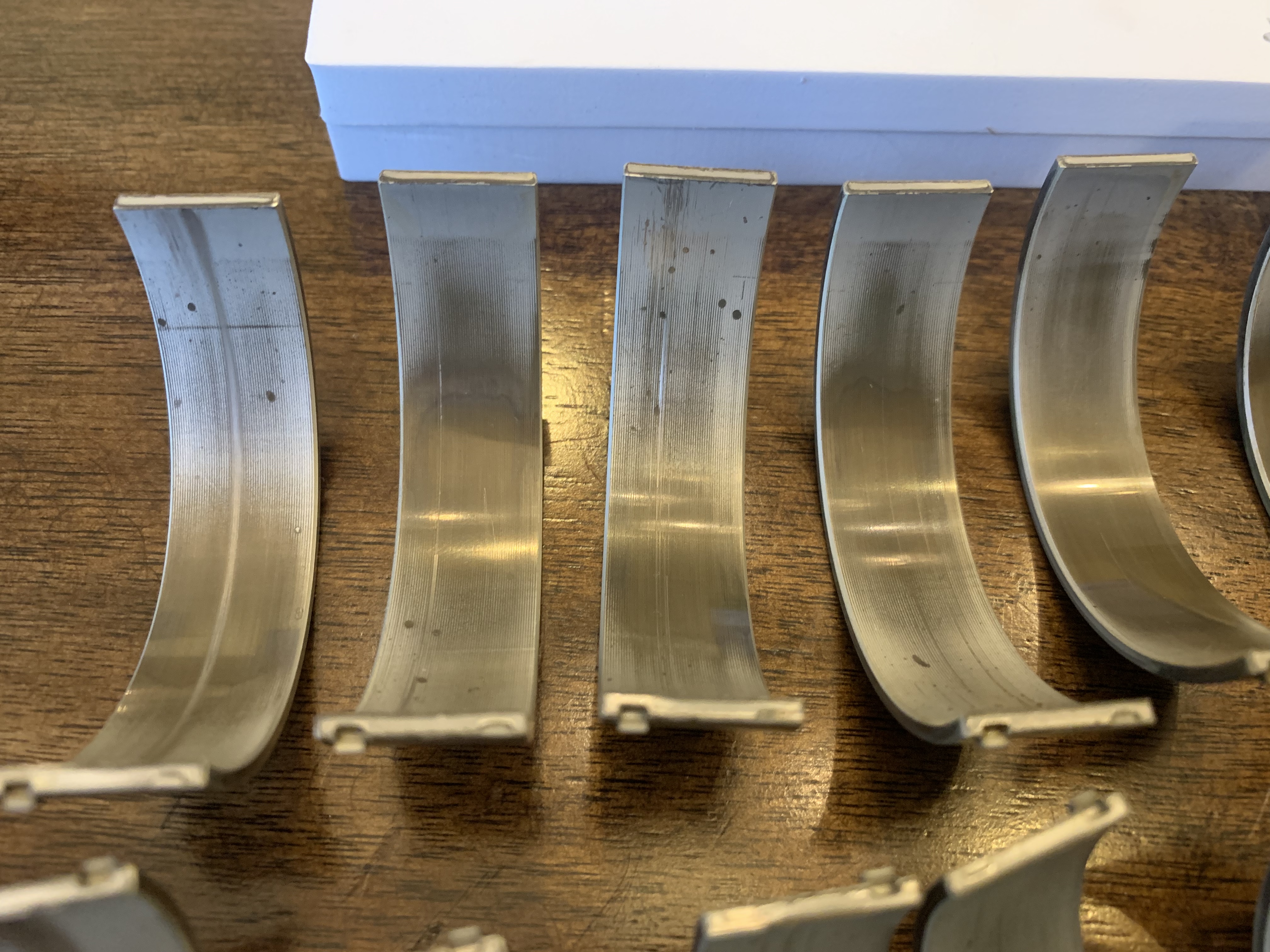
, I'm looking through them all in a data file I'm building (I've already gone through the rod bearing condition thread).1 thing though regarding a comment here and earlier.......
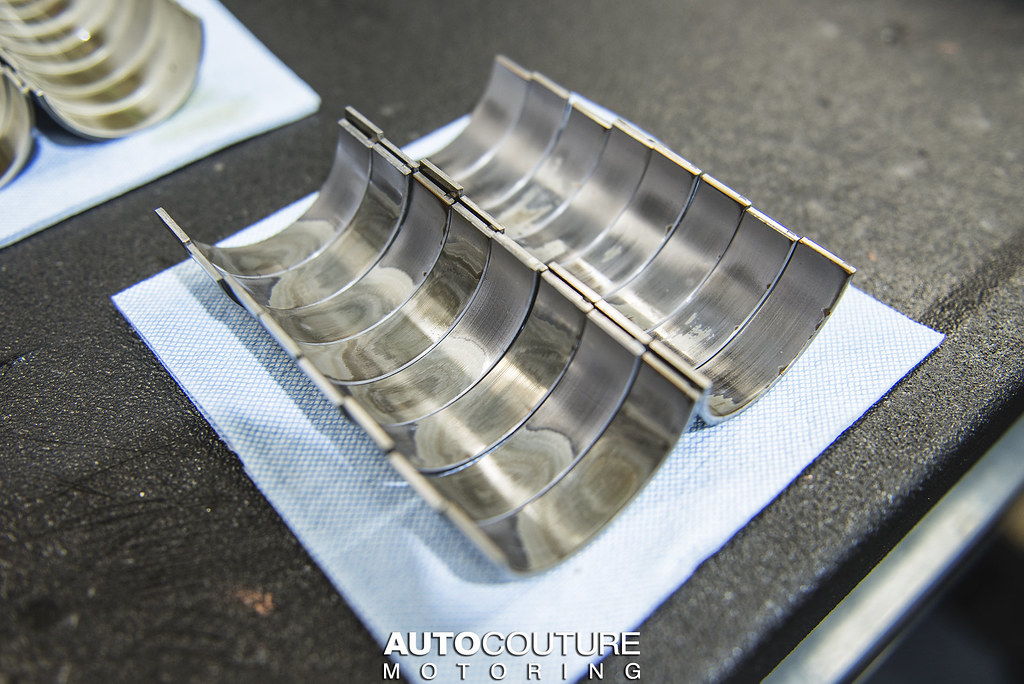
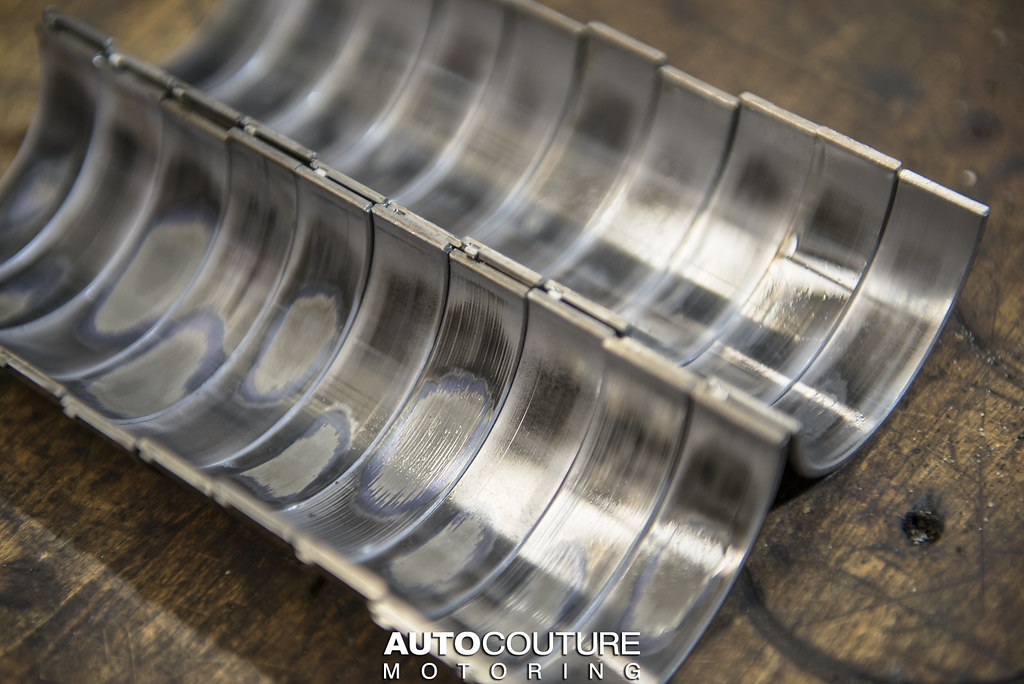
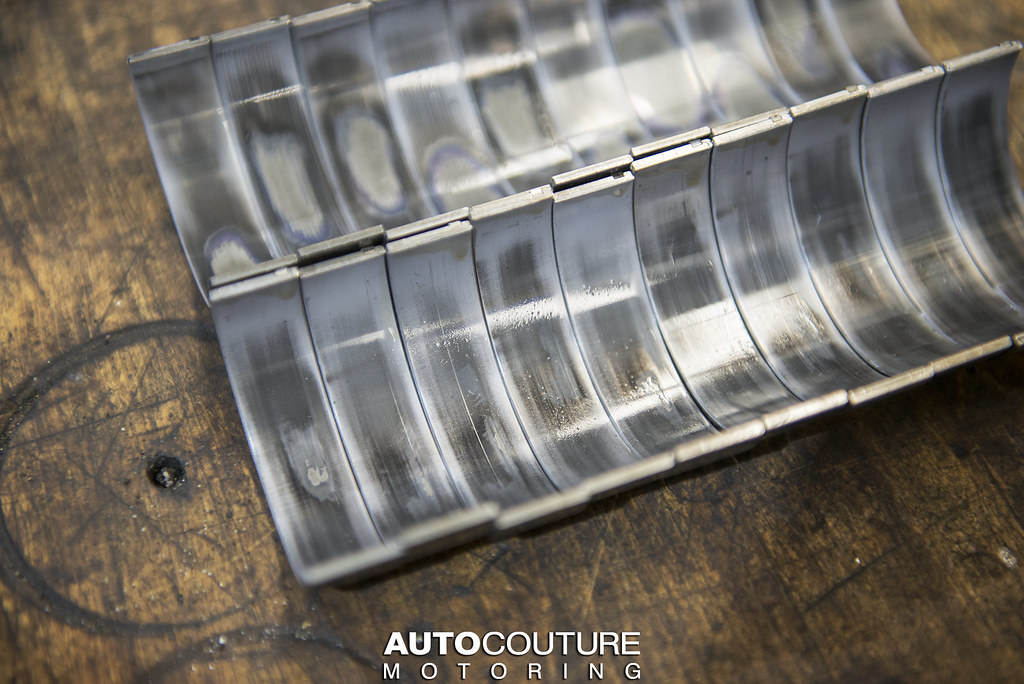
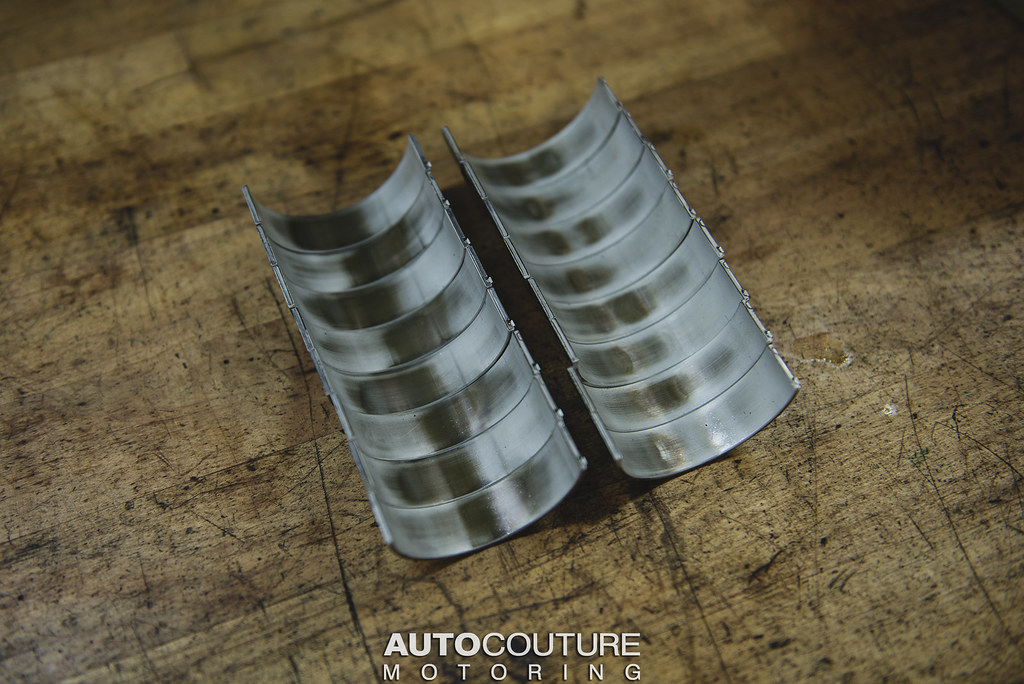
Matt@AUTOcouture wroteSorry but your general statement that rod bearings are a wear item is wrong [edit] (unless what you actually meant is RBs in S65/85s specifically?), they are not really (not normally at least in the lifetime of the car with typical use and e.g 200k+ miles), I'm surprised to hear an engine builder say this! As I'm sure you know, when the engine's running, a film of oil keeps the bearings and crank separated, so no contact and no wear. Yes a little bit of contact and wear happens when the engine is started and shut down, but that's it (assuming the engine's properly serviced and cared for etc).Here's the bearings out of John's Mineral White E93 with 29,xxx posted above ^. This is a proper example of bearing wear. Keep in mind, it is very important to emphasis here, that these bearings are a wear item. The problem is how unevenly and deep they typically get worn. The WPC GTS treatment is stronger and more resilient than the factory.
John has owned this car for most of its life, most of which have also been supercharged. He is very adamant about initial warm ups, oil change intervals, and overall usage. He does have fun with the car, but not in an abusive manner, certainly not until she's ready.
Considering that the supercharger does put a decent amount of added strain on the engine, you can see how well these look with the right care from the beginning. This is how the OEM bearings should be wearing near 40-50k. At this rate, his care and maintenance will keep the WPC bearings in there for a very, very long time.
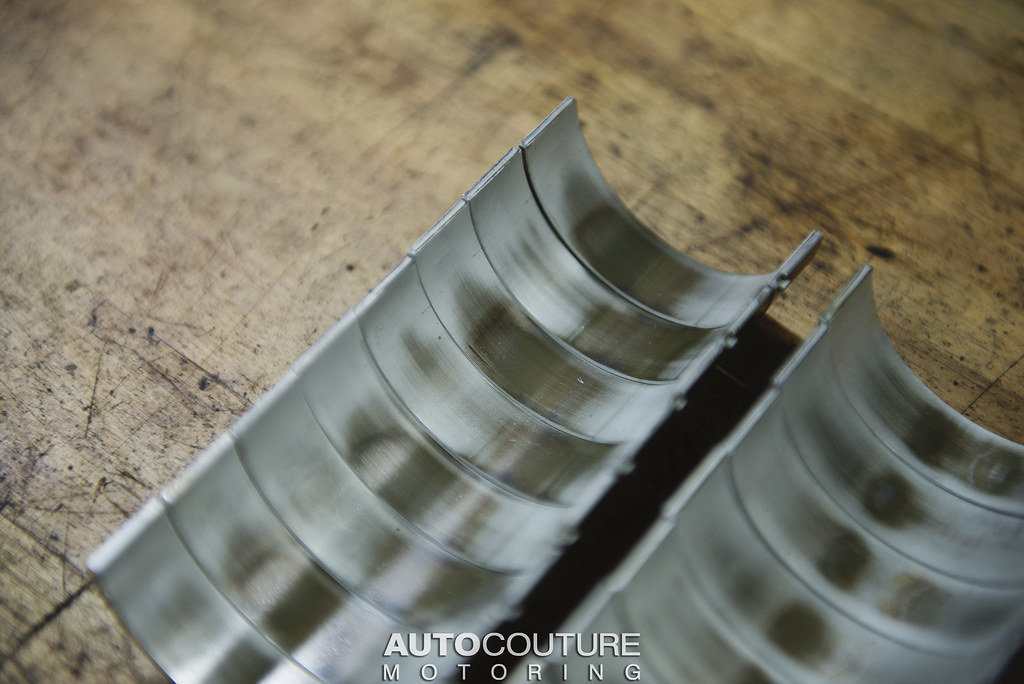
So the wear on nearly all S65 bearings is abnormal, and yes it's worthy of 'people freaking out about it'
, not just the pattern of wear.Most other road engines do not show the amount of wear that the S65's do (assuming they've been looked after properly of course).
You yourself mentioned the WPC shells you pulled after 25k on a supercharged car which came out looking 'barely worn', that is what they're supposed to look like
.The wear in the above LCI bearings is not what used bearings are supposed to look like either (outside of the S65), although they're not worn terribly (appears these bearings generally fair better than the earlier ones), the wear has worn out the micro grooves in the top layer (see photo below), reducing oil retention and slightly altering the eccentricity of the bearing, which I'm sure you'll agree won't positively affect the hydrodynamic oil film?
Would the LCI bearings with such wear have been able to carry on for many 1000s of miles afterwards? I don't know (maybe you have some thoughts on that?)[edit](I finally come across this post which sort of answers that), but it's not a good thing to compromise the oil film on a highly stressed engine, and I expect that's why you change them too
.Btw, consistent wear is more common on the LCI shells than the earlier ones (no idea why), it's not likely down to the car being cared for though.
Do you have photos of those WPC bearings from the supercharged car? I'd be really interested to see them
, trying to find photos of good condition used S65 rod bearings is like gold dust!Also, it's interesting that you use WPC OEM shells, seeing as their clearances are rather on the snug side (even the LCI ones), but the WPC treatment opens up the clearance very slightly right? (which is a good thing!). And might be at least 1 reason why the supercharged shells looked so good. Along with the following I guess?.....
we stopped using all other bearing options, as well as the OEM bolts, due to the relatively high level of scatter preload experienced with the stretch to yield design.
Sounds interesting, what do you mean by 'scatter preload', inconsistent clamp loading? How did you find this out?
Photo courtesy of Ximain's post here
Matt@AUTOcouture wroteIs this more for flushing out any potential debris rather than 'breaking in' the bearings, which AFAIK don't actually bed in like rings and bores?Yes, we have a mandatory oil change after the rod bearing service. 1,000 miles no more than 3k RPM and we do a full oil change.
Post referenced by Assimilator1 in E90 Rod Bearing Replacement. UK, Manchester/North West 11-24-2020
Matt@AUTOcouture wroteLead/copper bearings on a 2012 car! Has it had a replacement engine?

[edit] And this one!
Assm
Sorry this response has taken so long. With the culmination of the IMSA season last year, working through the holidays, and the every present challenge of running a business during the current climate, a response to some of your inquiries has taken some time
Lets get rolling Matt's mention that rod bearing wear is "normal" on the S65 and S85 motors is accurate as he is just using normal to mean common, and not good by any means. Yes all S65 and S85's experience premature rod bearing wear not easily found elsewhere in the automotive world. No one can debate that at this point. More common still are the causes for such wear. Its easier for us and some of the other major shops out there, that have done hundreds of these services, to begin to generalize about what is good and bad wear, based solely off of the incredible high sample size.
The condition of bearings, and the reason behind how and why they wear are also pretty well documented. Some but not all reasons can be: the S65s overall tighter then normal build tolerances and clearances, oil use, oil wear, oil filtration, contamination, type of care and type of use of the car, oil pump workload and efficiency, environmental conditions, climates, etc. What we commonly try to illustrate is not only the type of wear, but its consistency, or its inconsistency, with an idea of the environment, type of driving style, and relevant modifications, to help build this as a data and resource journal, more so then conclusive evidence to support one finding or another.
After almost 10 years of the service I can personally tell you, that sometimes the wear rate on some bearings, or even the lack thereof, can be quite odd when that wear doesn't directly or indirectly correlate to the car/driver/use. There are, unfortunately, a ton of variables at work.
Should you have more in-depth questions about our experience with them or want to talk at length about our observations, I would love to speak to you at the shop whenever you are available. One of the real joys of this job is going down a rabbit hole, so to say, of information and discussion about the intricacies and oddities of the S65 and its build variants Our number her is 201-666-3500. Looking forward to it Assm
Happy new year to all !
Sorry this response has taken so long. With the culmination of the IMSA season last year, working through the holidays, and the every present challenge of running a business during the current climate, a response to some of your inquiries has taken some time
Lets get rolling
Matt's mention that rod bearing wear is "normal" on the S65 and S85 motors is accurate as he is just using normal to mean common, and not good by any means. Yes all S65 and S85's experience premature rod bearing wear not easily found elsewhere in the automotive world. No one can debate that at this point. More common still are the causes for such wear. Its easier for us and some of the other major shops out there, that have done hundreds of these services, to begin to generalize about what is good and bad wear, based solely off of the incredible high sample size.The condition of bearings, and the reason behind how and why they wear are also pretty well documented. Some but not all reasons can be: the S65s overall tighter then normal build tolerances and clearances, oil use, oil wear, oil filtration, contamination, type of care and type of use of the car, oil pump workload and efficiency, environmental conditions, climates, etc. What we commonly try to illustrate is not only the type of wear, but its consistency, or its inconsistency, with an idea of the environment, type of driving style, and relevant modifications, to help build this as a data and resource journal, more so then conclusive evidence to support one finding or another.
After almost 10 years of the service I can personally tell you, that sometimes the wear rate on some bearings, or even the lack thereof, can be quite odd when that wear doesn't directly or indirectly correlate to the car/driver/use. There are, unfortunately, a ton of variables at work.
Should you have more in-depth questions about our experience with them or want to talk at length about our observations, I would love to speak to you at the shop whenever you are available. One of the real joys of this job is going down a rabbit hole, so to say, of information and discussion about the intricacies and oddities of the S65 and its build variants
Our number her is 201-666-3500. Looking forward to it Assm Happy new year to all !
