 |
|
 |

|
|
|
| 06-22-2019, 04:34 PM | #1 |
|
Lieutenant
 
241
Rep 475
Posts |
Lightest bbk - F/R?
All,
Looking to add a bbk to my e92. Some limited track time with some fun back road driving, car is not a dd. Brake rotors and pads are due to be replaced within the next 6 months, so seems like a good time to make a move to a bbk sometime soon. Considering Stoptech st 40 f/r but not sure of the weight savings, which are important to me, specifically on the front axle. From some experience with lightweight wheels on this platform, reduction in understeer and suspension compliance was noticeable. I imagine saving some weight from brakes will yield a similar result. Anyone have any info on the weight savings of the various available bbk over the stock setup? Figured it may be helpful to others to have such a list compiled. |
| 06-22-2019, 04:44 PM | #2 |
|
Lieutenant General
 

11865
Rep 12,880
Posts |
Lightest available has been discontinued. It was the ap racing cp5060 caliper with their 355mm rotors. Dropped 22lbs off the front axle. This is what I have.
The ap racing radical that Essex parts sells is just a few pounds more, but it is a higher performing kit. Aside from that, carbon ceramic kits are insanely expensive and they don't tell you the weight...
__________________
Instagram; @roastbeefmike
|
|
Appreciate
5
|
| 06-22-2019, 04:45 PM | #3 |
|
Colonel
3110
Rep 2,747
Posts |
I know people have done f10 m5 setups on e9x m3's but has anyone done carbon ceramic?
https://rover.ebay.com/rover/0/0/0?m...2F273877084927 what would it take to work? Who makes the caliper adaptors.... cc rotors typically weigh about 7lbs each less then iron right?
__________________
9ers
|
|
Appreciate
0
|
| 06-22-2019, 05:39 PM | #4 |
|
Major
 517
Rep 1,067
Posts |
|
|
Appreciate
0
|
| 06-22-2019, 08:12 PM | #5 |
|
Lieutenant General
11865
Rep 12,880
Posts |
There's also a reason all the track gt3 guys swap them out for iron rotors...
__________________
Instagram; @roastbeefmike
|
|
Appreciate
3
|
| 06-23-2019, 08:21 AM | #6 |
|
New Member
0
Rep 7
Posts |
https://www.m3post.com/forums/showthread.php?t=1423661
I suggest that you ask from Slonik. You Can get full front 392 mm carbon discs /rear carbon discs + Brembo calipers for 13 $. With full carbon set-up I think it is somewhere to 20 kg / 40 lbs offf from the car. Or If you want only front axle maybe Slonik Can do this also. He has tons of options... |
|
Appreciate
0
|
| 07-03-2019, 06:00 PM | #7 |
|
Colonel

2795
Rep 2,188
Posts
Drives: 2011 E92 M3
Join Date: Oct 2017
Location: Victoria
|
NASCAR uses cast-iron disks. And let us remember, these cars are 3,395.12Lbs, produce upwards of 800HP and run wide, sticky race radials!
GTE and GTE-pro at Le Mans uses cast-iron disks. GTLM and GTD in IMSA use cast-iron disks. The Porsche RSR comes with cast-iron disks - and it is 100% intended to be raced over and over and over... Other than addressing the brake dust issue and some people's egos, there is, and never will be, a need for carbon-ceramic rotors on or off the track. True carbon based braking systems, like those used in Le Mans prototypes and F1, are an entirely different cup of tea.
__________________
 2011 E92 M3 - 6MT, ZCP, ZF LSD, ESS G1, Some other goodies... |
|
Appreciate
5
|
| 07-03-2019, 06:14 PM | #8 | |
|
///M Powered for Life

12760
Rep 11,154
Posts |
Quote:
They do *not* 'brake better' than a decent iron set. That is insanity. I've personally destroyed the CCBs on a M4 GTS in fewer track days that an iron setup would last. Supercars have them because weight is important and they know those cars will not be driven hard. For a track car it is a stupid option, even if you are a zillionaire. If you are a zillionaire, buy a good BBK |
|
|
Appreciate
1
Scharbag2794.50 |
| 07-05-2019, 10:46 PM | #9 |
|
Lieutenant Colonel

809
Rep 1,723
Posts
Drives: 2011 M3 Jet Black:ZCP, ZCV, ZP
Join Date: May 2011
Location: Atlanta, Ga
|
Essex AP are the answer
jritt@essex
__________________
 |
|
Appreciate
2
ebisueight1103.00 jritt@essex1176.50 |
| 07-11-2019, 02:40 PM | #10 |
|
Captain

1177
Rep 978
Posts |
Our Essex Designed AP Racing Radi-CAL front and rear systems shave over 30 lbs. of unsprung weight from the car, yet they're durable enough to handle anything you could possibly through at them. We've had them run the 25 Hours of Thunderhill on several cars without a required pad swap.
Our systems weigh very close to the what carbon ceramic setups weigh, without all the associated pitfalls and expense. They are also considerably less expensive than carbon ceramic setups, with vastly superior durability, more pad options, they're less fragile, superior wheel clearance...the list goes on and on. You can see lots of customer feedback on our blog, including lots of feedback from M3 owners and former carbon ceramic owners (Porsche GT3, Corvette Z06/ZR1, Lambo, Ferrari, etc.). Videos that detail the entire system, design concept, Radi-CAL technology, etc. can be found here. Feel free to PM, email, or call for more details. Thanks for your consideration. |
|
Appreciate
0
|
| 07-11-2019, 02:44 PM | #11 |
|
Captain
1177
Rep 978
Posts |
To the OP...I forgot to mention, our front system employs a 372x32mm, 84 vane AP Racing J Hook disc, which is about as big as you can cram into an 18" wheel. Our front systems shave about 14 unsprung lbs. from the nose. You can see the difference between our two front Competition Kit options here:
Which AP Racing Radi-CAL is Right for Me, the CP9660 or CP9668? |
| 07-11-2019, 05:18 PM | #12 | |
|
Enthusiast


118
Rep 150
Posts |
Quote:
Adapters were fabricated by a friend of mine (Wassim Wehbe in Lebanon) and he even manufactured a piece for the oem handbrake to work perfectly so I can pass the vehicle inspection.
__________________
|
|
|
Appreciate
1
SAMM3Y3109.50 |
| 07-11-2019, 06:42 PM | #13 |
|
Brigadier General

1646
Rep 3,149
Posts |
ap racing hands down.
__________________
North American Mr12Volt Carplay/Android Auto Distributor
INSTAGRAM: GORDON.M3 DINAN | EVOSPORT | VAC | ARP | RD SPORT | NEEZ | EIBACH | CSF | IND | BILSTEIN | KLASSEN | BREMBO | ENDLESS | BBS | BPM SPORT | PROJECT MU | EVENTURI |
|
Appreciate
0
|
| 07-11-2019, 07:17 PM | #14 | ||
|
Lieutenant General
11865
Rep 12,880
Posts |
Quote:
__________________
Instagram; @roastbeefmike
|
||
|
Appreciate
0
|
| 07-12-2019, 06:09 AM | #15 | |
|
Enthusiast
118
Rep 150
Posts |
Quote:
*Never mind the banans  * *The f10m5 front rotors are 30.5lbs as per scmiedmann https://www.schmiedmann.com/en/produ...ct=34112284102
__________________
Last edited by Makaveli7; 07-12-2019 at 06:18 AM.. |
|
|
Appreciate
1
SAMM3Y3109.50 |
| 07-14-2019, 10:12 PM | #16 | |
|
Lieutenant
90
Rep 431
Posts |
Quote:
__________________
2011 M3 Sedan
2001 M Coupe 2020 Macan Turbo 2018 GT3 |
|
|
Appreciate
0
|
| 07-14-2019, 10:21 PM | #17 | ||
|
Colonel
3110
Rep 2,747
Posts |
Quote:
9lbs less per rotor than my stoptech st60 380mm front which is 22lbs. I think a 355mm stoptech trophy rotor is about 15.25lbs.
__________________
9ers
|
||
|
Appreciate
1
Makaveli7118.00 |
| 07-16-2019, 08:17 AM | #18 | |
|
Captain
1177
Rep 978
Posts |
Quote:
https://www.essexparts.com/storage/w...3_radi-cal.pdf Here's a pic we took of the front dust shield removal: 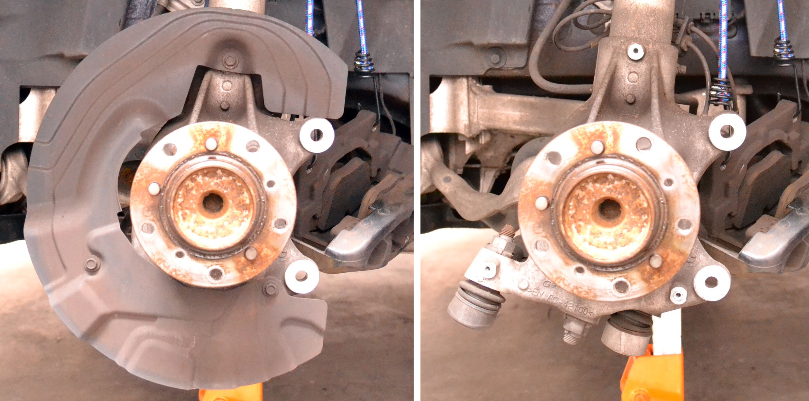 On the rear, you will need to trim back or remove the dust shield (see step 6 in the manual below): https://www.essexparts.com/storage/w...CP9449-340.pdf |
|
| 07-16-2019, 09:30 AM | #20 | |
|
Captain
1177
Rep 978
Posts |
Quote:
https://www.essexparts.com/essex-des...36530mm-M2M3M4 It is a monster rear kit in terms of performance, and the rear discs seem to be lasting forever on our customer cars. It uses the CP9449 Radi-CAL mated to a 365x30mm disc, and shaves 10 unsprung lbs. from the car. It also maintains full parking brake functionality. The pad on the rear is 16.7mm thick. The pads for our front kits are either 18mm (CP9660) or 25mm (CP9668) thick. 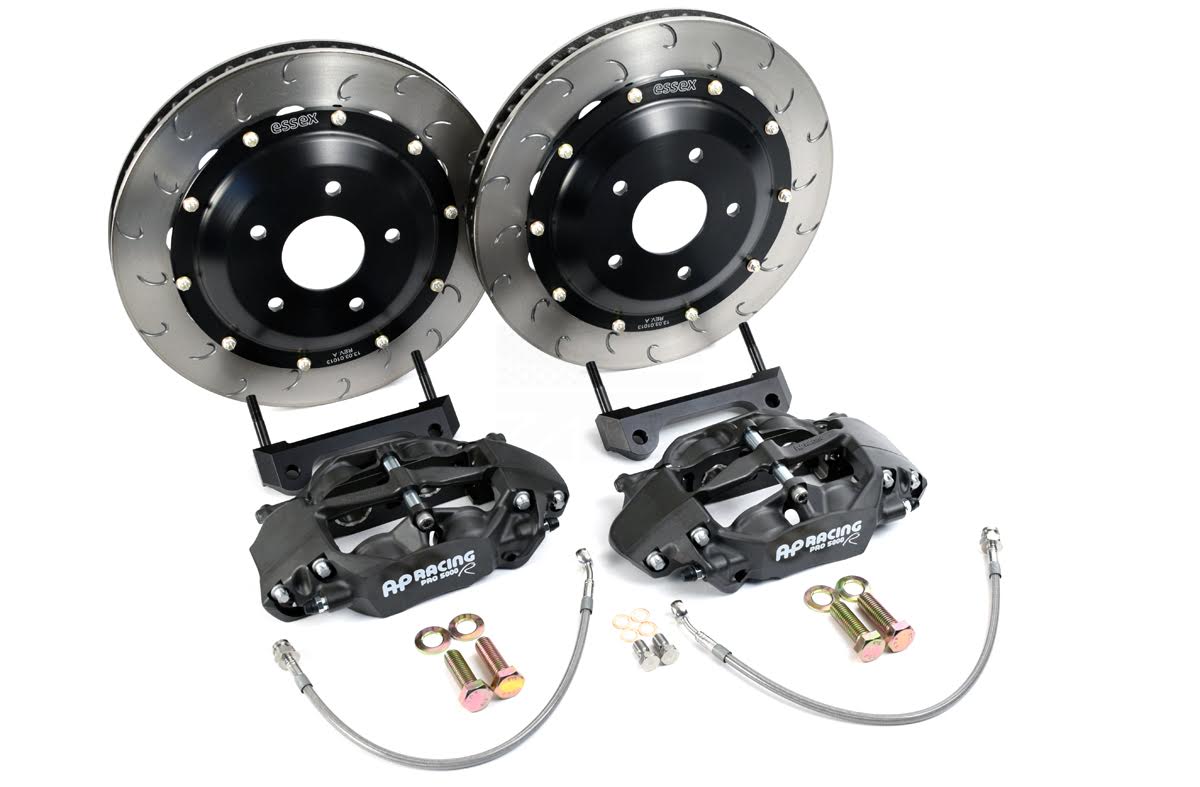 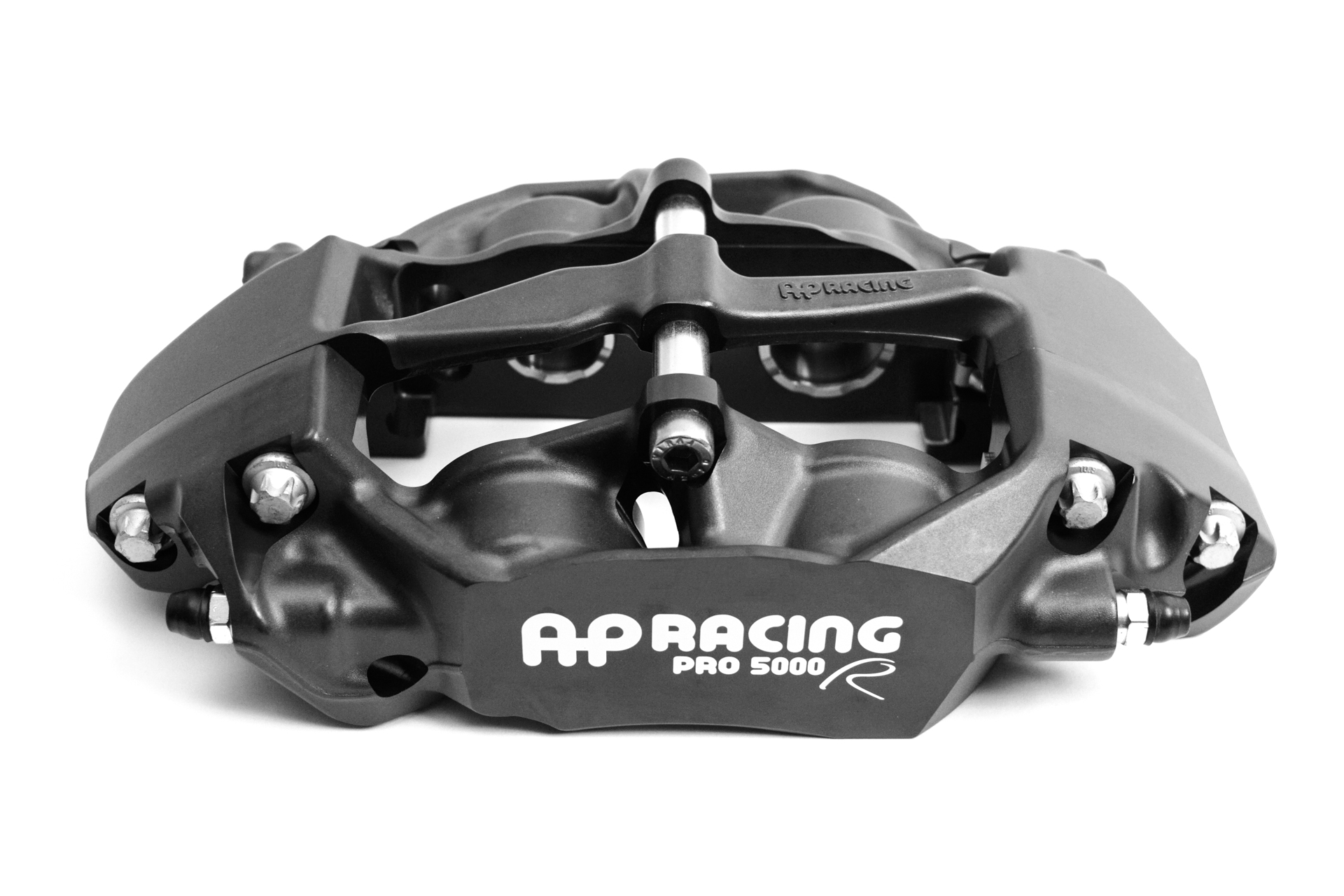 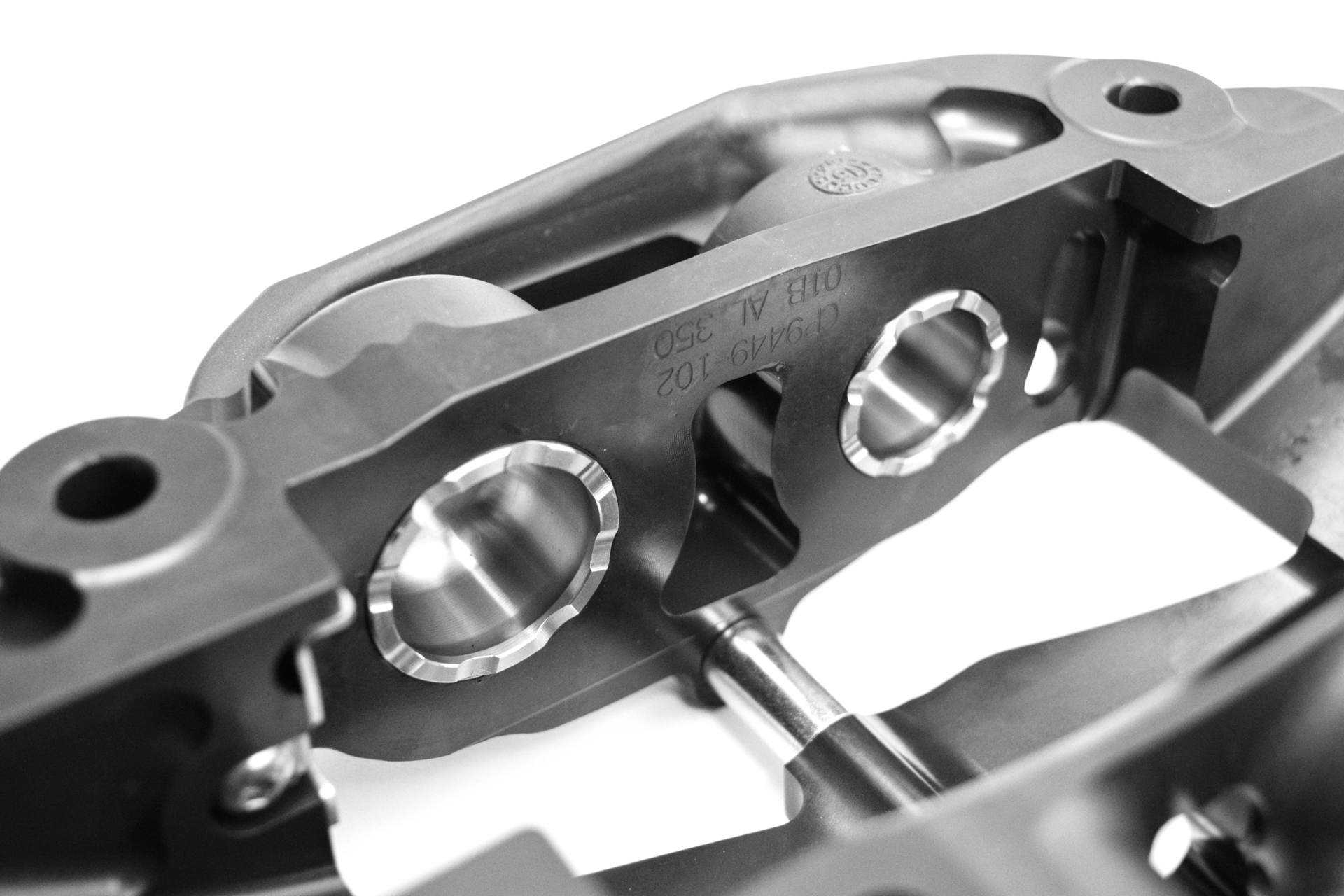 |
|
|
Appreciate
2
SYT_Shadow12759.50 Makaveli7118.00 |
| 07-16-2019, 09:05 PM | #21 |
|
Lieutenant


466
Rep 476
Posts
Drives: e46 M3, e82v8 (s65 swapped)
Join Date: Feb 2015
Location: Moscow Region, Zhukovsky
|
just put it here
390mm and 6 piston brembo, which work with huge 190mm length pads. 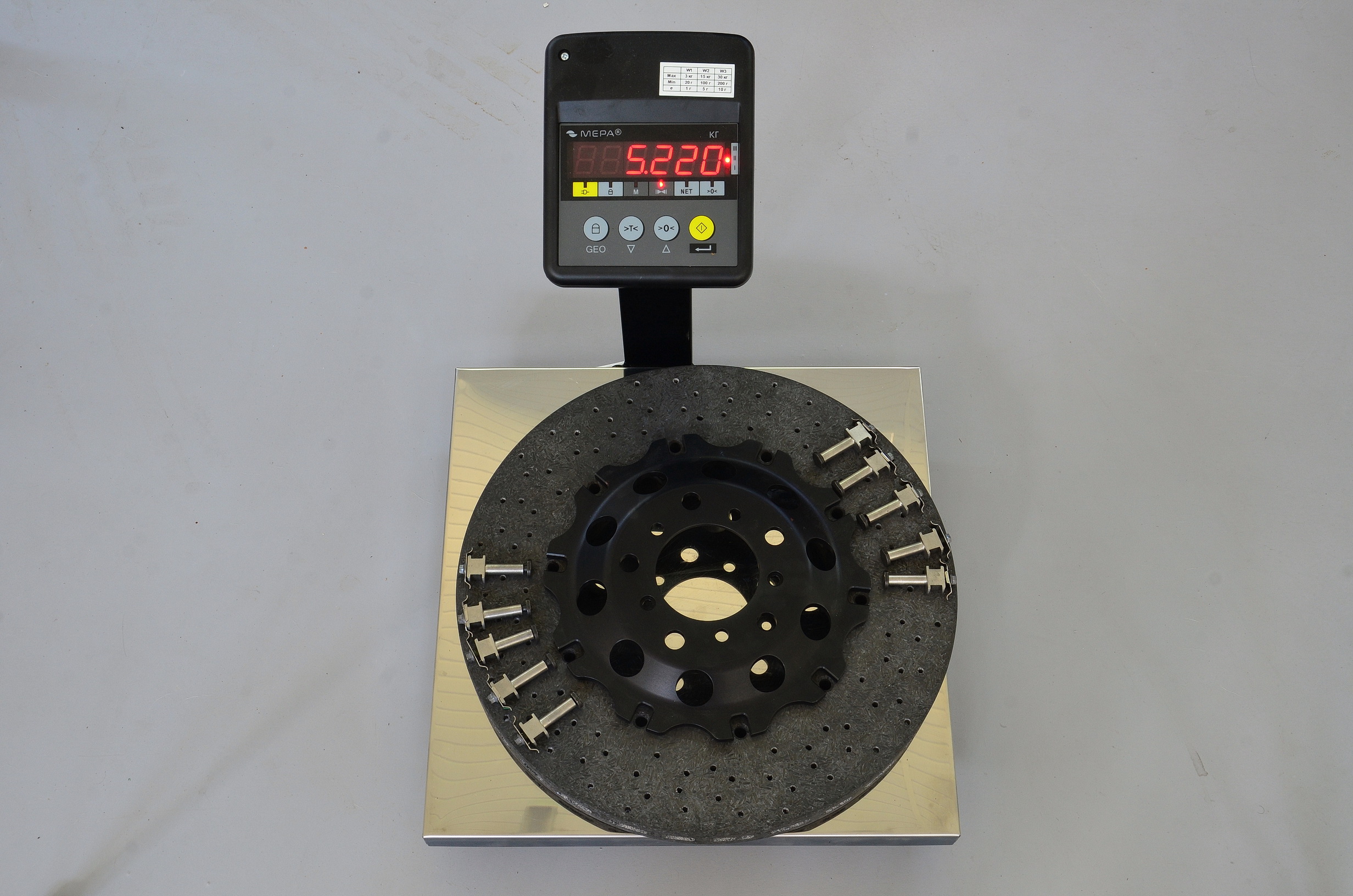  |
|
Appreciate
4
|
| 07-17-2019, 06:53 AM | #22 |
|
Captain
1177
Rep 978
Posts |
As others have noted, if you're going to be tracking the car at all, iron is the way to go. I have Porsche GT3 and Corvette Z06 clients who ran their first set of carbon ceramic discs through the wringer in as few as 10 days at the track. The replacement cost at those wear rates isn't sustainable unless you own an oil field somewhere. The replacment iron disc rings for our AP Radi-CAL setup cost $395 each for the front, and $329 each for the rear.
Front AP Racing J Hook 372mm= https://www.essexparts.com/ap-racing...-rings-37234lh Rear AP Racing J Hook 340mm= https://www.essexparts.com/ap-racing...-rings-34028rh Our AP Racing J Hook discs also last an incredibly long time on an e90 M3. We recently had an e90 owner write a review of our system. He was on the same set of discs after five years of mixed road and track use! https://www.essexparts.com/news-blog...cing-brake-kit Even with cost aside, an iron system is far more versatile than a carbon ceramic one. From our website... Iron vs. Carbon Ceramic Brake Discs In the past few years, Carbon Ceramic brake discs have become increasingly popular on high-end sports cars as either standard equipment or as a factory installed option. Although expensive, they're a great choice for a car that is used exclusively on the street. They save a large amount of unsprung weight, they don't generate much brake dust, have low NVH, and they may even last longer than the rest of the car! For the avid track enthusiast however, they're typically not the best choice. On the racetrack, repetitive stops from high speeds generate considerably higher brake disc temperatures vs. what could ever be legally or sanely achieved on the street. Various manufacturers producing the current crop of carbon ceramic discs claim to match iron disc durability on the track, but our experience tells us otherwise. While they may be less resistant to warping or deformation at repeated elevated temperatures, the biggest problem with carbon ceramic discs is that they tend to oxidize at track temperatures, showing rough surface eruptions on the disc face. In some cases the oxidation is terminal (chopped fiber discs), and the discs must be scrapped once it occurs. In other cases (continuous fiber discs), the discs can be resurfaced, but only a limited number of times and at a high cost. Most carbon ceramic discs are measured in terms of minimum mass, rather than the traditional minimum thickness used to measure iron discs. Once the minimum mass is reached, the carbon ceramic disc is trash. Below is an oxidized carbon ceramic disc. Notice the dark spots in which the surface is flaking off / eroding. When your disc looks like this, it has become a $2,000 paperweight! 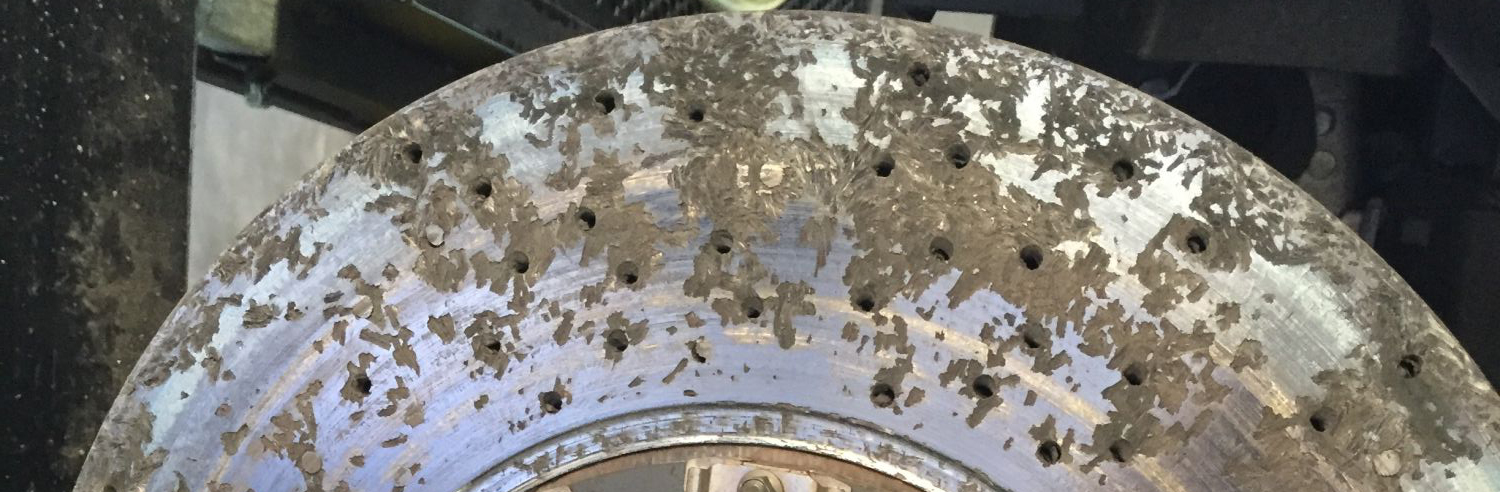 Other Potential Pitfalls with Carbon Ceramic Discs: Low airflow- If you look at a specific car model that offers both iron and carbon ceramic discs as an option, the carbon ceramic discs will almost always be considerably larger in overall dimension, with a specific emphasis on a tall radial depth (distance from outer disc edge to inner disc edge). Whereas an iron disc uses a web of directional internal vanes to speed airflow through the disc, most carbon ceramic discs rely primarily on their large surface area to radiate heat into the air surrounding the disc. Hence, the tall radial depth. Expensive and limited range of compatible brake pads- There aren't many brake pad options with carbon ceramic discs. The pads must be compatible with the specific disc material being used, and if they aren't, they can destroy the discs in a hurry. Since brake pads are a very personal choice to most track junkies, carbon ceramic discs don't provide many options for the driver to chase a desired feel. Also as noted above, carbon ceramic discs tend to be very tall radially, which means very large brake pads are required. In the world of brake pads, price is usually directly proportional to size: Bigger = more expensive. Poor feel- Experienced drivers will tell you that cast iron discs provide superior pedal feel due to less compress-ability. Some drivers find that carbon ceramic discs feel soft or abrasive at lower temperatures, but feel like stone with little modulation once they heat up. Feel and the resulting confidence is rather important when hurtling towards a guardrail at 150mph! High replacement disc cost- Carbon ceramic replacement discs can be hideously expensive. If you do wear out or damage a disc, it can cost thousands of dollars to replace each one. When running carbon ceramic discs hard on a racetrack, the odds of having to replace one or more of them increases exponentially vs. if you only drive your car on the street. Damage-prone- Many manufactures suggest covering their carbon ceramic discs when handling them, so they are not chipped or fractured. One knock when changing a wheel can destroy a disc. Additionally, some chemical wheel cleaners or abrasives used in car detailing can damage carbon ceramic discs. Splinters- Carbon ceramic discs shouldn't be handled with bare hands, as they can leave carbon splinters in the skin. Greater sensitivity to burnishing/bedding-in- Most manufacturers have an explicit, and sometimes intricate, set of instructions for bedding-in their carbon ceramic discs. Iron discs can typically be prepared via a simple series of stops from 60-80 mph with the brake pad of choice. Carbon Ceramic is NOT Carbon/Carbon At this stage you may be saying to yourself, "But I saw that the XYZ professional race cars were running carbon brakes at the track." The carbon brakes currently being used in professional racing are carbon/carbon (abbreviated C/C), which is actually a different material vs. the carbon ceramic discs used on road cars. The carbon ceramic brake discs on road cars are a Carbon Ceramic Matrix (CCM). In recent times many professional racing series (F1, ALMS, IRL, etc.) have switched to carbon/carbon brake discs in an effort to reduce weight. Carbon/Carbon is an outstanding lightweight material for racing, but requires heat before it starts to generate usable friction. As such, they're completely ill-suited to a typical morning commute in a road car! Iron Disc Benefits So what can AP Racing J Hook iron discs do for a car previously equipped with carbon ceramic discs? Increased airflow and slower heat transfer to other brake components- AP Racing J Hook discs have a unique, high-count vane design that promotes airflow, heat evacuation, and rapid cooling. They don't rely on a large surface area to cool via radiation. The iron discs will move more air than your carbon ceramic's, and as a result they won't heat your brake pads, caliper pistons, and brake fluid up as quickly. You'll be able to run longer sessions without brake fade, and you'll enjoy the confidence that comes along with them. They'll also make any brake ducts that you have on the car more effective and useful. Huge range of compatible brake pad compounds- Iron discs will open up a much greater range of available brake pads. You'll be able to achieve a different feel, and tailor your brake setup depending on your needs and environment, whether that is running an AutoX or the most demanding racetrack in your area. You'll also likely be paying less per brake pad set than you were previously, and your pads will last longer. Inexpensive spare discs- You'll no longer have to spend thousands of dollars when it's time to replace your discs. AP Racing J Hook's typically only cost $300-500 per iron disc ring, so you won't have to stress about anything happening to them. They're inexpensive enough that you can always keep a spare set on hand, so you won't have to worry about any brake-related downtime when you're out at the track. Durability- Iron discs can take a beating. You can stash your spares in your race trailer, and you won't have to worry about handling them, covering them, dinging them, or chipping them when changing your wheels. As you can see, although iron discs do come with a slight weight penalty, they're still the smart choice if you run your car hard on the racetrack. They're the obvious solution that has been proven countless times on tracks around the world, at all levels of motorsport. |
|
Appreciate
1
Makaveli7118.00 |
Post Reply |
| Bookmarks |
|
|