
Try out the new beta site for M3Post. You can read more about what's happening here
BMW M3 Forum (E90 E92)

BMW Garage BMW Meets Register Today's Posts

Go Back   M3Post - BMW M3 Forum > E90/E92 M3 Technical Topics > Engine, Transmission, Exhaust, Drivetrain, ECU Software Modifications
 
European Auto Source (EAS)
Post Reply
 
Thread Tools
      01-04-2018, 09:37 AM   #353
Duk996
Second Lieutenant
Duk996's Avatar
United_States
251
Rep
256
Posts

Drives: E92 m3
Join Date: Oct 2017
Location: west virginia

iTrader: (0)

Quote:
Originally Posted by doogee View Post
Quote:
Originally Posted by Green-Eggs View Post
See above. According to VAC FB page at the time they announced the new bearings, they are extra clearance BEFORE the coating is added. Multiple people have called VAC and depending on who you talk to, some get this same answer even today. It's not extra clearance after the coating is added.
You don't seem to understand how these bearings work. VAC or BE. Period.

Do you not understand these coatings are sacrificial? They are not made to last. Read my post about the pictures of the BE Bearings. I said the coating is junk because it's wearing off at 5000 miles yes, but did you miss the point where I said there is nothing wrong with the bearing?

On the VAC side, you get OEM clearance, and once the coating has worn off, you have some extra clearance.

NO coating will last forever.


I give up.

BE Bearings are the greatest thing ever created. VAC bearings are shit and no one should buy them.

I'm pretty sure that's what everyone wants to hear so there you have it

Enjoy your cult. You all choose to read what you want, and leave out what you choose.


I was genuinely interested in pulling my bearings this weekend to share with everyone but I just don't care to try contributing to the community anymore. It is a waste of time, and I can now see why the people who are actually educated on the topic and are unbiased don't post on the forums anymore. It's a shame.
Don't let one member dissuade you. There are plenty like me who read these things looking for truth but don't always chime in.
Appreciate 1
MPower7115.00
      01-04-2018, 12:47 PM   #354
Bartledoo
Driver
Bartledoo's Avatar
2708
Rep
2,715
Posts

Drives: 2011 E90 M3 6MT
Join Date: Aug 2015
Location: Seattle, WA

iTrader: (0)

Garage List
Quote:
Originally Posted by Sneaky Pete View Post
But thats the problem...the theory isn't supported at all by "real world" data.
For example: If the S65's RB clearance specification is insufficient how are engines rebuilt with factory RB clearance able to cover high mileage and have bearings in good condition upon disassembly?
If the S65's factory RB clearance specification is insufficient such that it causes engine failure then most S65 engines should have already failed, not just a small %.

In any search for a theory to explain a phenomenon, you look for the simplest and neatest theory that satisfies all the noted outcomes. Not one that requires numerous logical contortions, a complete disregard of common sense while at the same time failing satisfy any of the outcomes other than engine failures are often likely to have an insufficient RB clearance component.
BEs tight factory RB clearance theory is a classic example of confirmation bias with extra pretzel logic on the side.


Yet BMW in fact did indeed make many fundamental changes to the S85 design when building the S65 platform. Not least, hardware changes to the ionic anti knock system, a complete vanos redesign, a new lubrication system and of course a new crank.
BMW had the ideal opportunity during the S65 design to make any bearing clearance changes that they deemed necessary. If they were at all concerned about the legal implications they would simply keep the same RBs as used in the S85 (which they did IIRC) and machine the S65s new crank to give whatever clearance they desired....balancing out the new lubrication system to ensure other parts, such as the main bearings, were not compromised by increasing oil flow through the RBs.
The change would be invisible as BMW do not release proprietary information such as the RB specifications for these engines to the public domain and the new (shortened) crank would have a new part number.

Its not inconceivable that the blueprinted hand built pre production S65 engines performed perfectly well during extensive endurance and climate testing. But during the process of automating the engine building aspect of manufacture and/or in the production of the rod bearings by clevite, tolerance control was compromised. Such that at one end of the scale, engines with the correct specified factory RB clearance would be able to cover high mileage without problem while at the other end of the scale, engines with out of tolerance RB clearance would fail at low mileage. The majority of engines being spread somewhere along the spectrum.
(The first quote that wasn't mine)

When I was referring to fundamental design changes it was directed more to the basic engine elements which have been well past a state of major evolution for many years. These are things which would be very difficult to argue were changed due to recent technological advancements. I'm sure you can see how those differences are manipulated in a courtroom.

As for your suggestion that blueprinted and hand built S65 engines probably would be quite long lasting, I think many here would agree because the clearance would be so close to nominal. The tolerance range allows for a very large percentage difference between nominal and the small extreme. You claim that QC is the issue, but the specs allows for huge variation on their own and are more like an inherent QC issue. Maybe more clearances ended up at the small extreme than they guessed would...Who knows?

Just look at the ranges for both oem bearings, which are shown above, and then tell me (without even discussing what a correct "exact" clearance should be) that the difference from one extreme to the other is not significant and would not alter operation in any way.
__________________
E90M 6MT Slicktop Single Humper in need of a diet
Appreciate 0
      01-04-2018, 03:19 PM   #355
IanMan
Space Shuttle Door Gunner ★★★★★
IanMan's Avatar
406
Rep
371
Posts

Drives: Giulia Quadrifoglio
Join Date: Nov 2016
Location: Hawaii, Orlando

iTrader: (0)

I'll repeat myself. If there wasn't a clearance issue, then why did BMW update S65 and S85 bearings with a bigger clearance....
__________________
2018 Alfa Romeo Giulia Quadrifoglio
Appreciate 1
M3SQRD7937.50
      01-04-2018, 03:33 PM   #356
dv13
New Member
11
Rep
19
Posts

Drives: 2011 e90 m3
Join Date: Mar 2017
Location: NOVA

iTrader: (0)

I for one would be interested in seeing this, so please share!

This discussion has been clear as mud to me with regard to what the actual issue is. As I stated in my initial question, if the VAC/Clevite "extra clearance" bearings with the OEM clearances, when accounting for the coating, are going back into vehicles with known (in some cases severe) wear issues (and no other corrective measures), why are they coming back out perfectly clean, coating and all, after thousands of miles?

Are we saying that the bolts were incorrectly torqued from the factory in the problem cases or that BMW didn't properly measure for spec clearances when assembling? Do we know that BMW didn't check for proper clearance or made systematic errors in measurement when assembling these engines? Seems unlikely to me, but certainly possible.

That's why I asked the initial question about the possibility of the bolts (or something, but bolts seemed a reasonable place to start) causing a deviation from spec clearance over time, dependent on environmental variables (i.e., oil weights/change interval, SC or not, more revs near/at redline or high revs when cold, vibration from wearing motor mounts, etc... may all play a role in the environmental factors OR not). This type of problem would also result in a spectrum of bearing condition over the set of S65 engines, with the worst cases failing very early and the very best cases failing much, much later.

I can see how adding clearance can help keep the bearings out of the way in all cases, but is that really addressing the root issue and what does it do to engines longer term when making these clearances bigger? Will doing this somehow affect oiling of the main bearings or other areas over the longer term? I'm not saying that BMW engineering are wizards by any stretch of the imagination, but with my engineering background (unfortunately not mechanical), I'm acutely aware that there are often issues with changing just one component/characteristic within a complex system, specifically unintended secondary effects.

I'm just not sure what those secondary effects might be in this case, especially given that we have real world examples of problem S65 engines taking OEM clearance bearings (VAC/Clevite with coating) and showing zero wear for significant miles after the replacement. Is there a simple explanation for why these cars don't show any wear at the same clearances?


Quote:
Originally Posted by doogee View Post
You don't seem to understand how these bearings work. VAC or BE. Period.

Do you not understand these coatings are sacrificial? They are not made to last. Read my post about the pictures of the BE Bearings. I said the coating is junk because it's wearing off at 5000 miles yes, but did you miss the point where I said there is nothing wrong with the bearing?

On the VAC side, you get OEM clearance, and once the coating has worn off, you have some extra clearance.

NO coating will last forever.


I give up.

BE Bearings are the greatest thing ever created. VAC bearings are shit and no one should buy them.

I'm pretty sure that's what everyone wants to hear so there you have it

Enjoy your cult. You all choose to read what you want, and leave out what you choose.


I was genuinely interested in pulling my bearings this weekend to share with everyone but I just don't care to try contributing to the community anymore. It is a waste of time, and I can now see why the people who are actually educated on the topic and are unbiased don't post on the forums anymore. It's a shame.
Appreciate 0
      01-04-2018, 04:22 PM   #357
atopa2002
Lieutenant
atopa2002's Avatar
United_States
272
Rep
590
Posts

Drives: Z3M, 2013 e92 M3, F15 X5
Join Date: Jan 2006
Location: Richmond,VA

iTrader: (2)

Quote:
Originally Posted by IanMan View Post
I'll repeat myself. If there wasn't a clearance issue, then why did BMW update S65 and S85 bearings with a bigger clearance....
BMW only changed the bearing material ' kept the clearance the same.
Appreciate 0
      01-04-2018, 05:59 PM   #358
Bartledoo
Driver
Bartledoo's Avatar
2708
Rep
2,715
Posts

Drives: 2011 E90 M3 6MT
Join Date: Aug 2015
Location: Seattle, WA

iTrader: (0)

Garage List
Quote:
Originally Posted by atopa2002 View Post
BMW only changed the bearing material ' kept the clearance the same.
They did change the clearance actually.
__________________
E90M 6MT Slicktop Single Humper in need of a diet
Appreciate 0
      01-04-2018, 06:23 PM   #359
deansbimmer
BimmerPost Supporting Vendor
deansbimmer's Avatar
4324
Rep
3,023
Posts


Drives: 2011 E93 M3
Join Date: Nov 2014
Location: DFW, Texas

iTrader: (17)

Garage List
1988 E30 M3  [0.00]
2006 E46 M3  [0.00]
2024 X7 M60i  [0.00]
2011 BMW M3  [0.00]
There's a point that seems to be getting lost to some seeing as the same question is being asked and the same points are being argued over and over. Tolerance stacking is a very real issue in all precision assemblies, but I'm not sure many posting here actually know how it relates to the issue at hand so I want to discuss it briefly.

When an engine is assembled by a low volume engine builder or race shop, each component is measured and compared against a blueprint or pre-determined specification. If the spec is not met, each part is adjusted until all dimensions are exactly as required (or at least as close as possible, machine accuracy deteriorates at a certain point).

At the BMW factory, perfectly identical dimensions are not repeatable down to the thousandth of an inch when cranking out thousands of engines. So parts such as journals and bores are machined to a designed tolerance of a few hundredths or thousandths of an inch depending on the part. They do a decent job of identifying size of some parts and grouping them with proper mating parts (main bearing shells for example), but they do not measure each individual part as the engine is assembled and go back and forth between the machine shop to fine tune dimensions. Neither do they "size bin" like-sized parts and pick and choose from lots to select parts that yield the best assembled fit.

As a result, it is inevitable that we will get a crankshaft with a journal that may measure on the larger side of what they deem acceptable, but is still used. Add a connecting rod with a bore that may be a couple thousandths on the smaller side, or a bearing shell that is .0001-.0002" thicker than others, and suddenly we've got a rotating assembly that is on the tighter side of what should be acceptable as a whole. Or, too tight altogether if compared to some existing industry standard. But wait there's more! Throw in human error and hardware like rod bolts that may induce bore distortion and then you've got a double whammy.

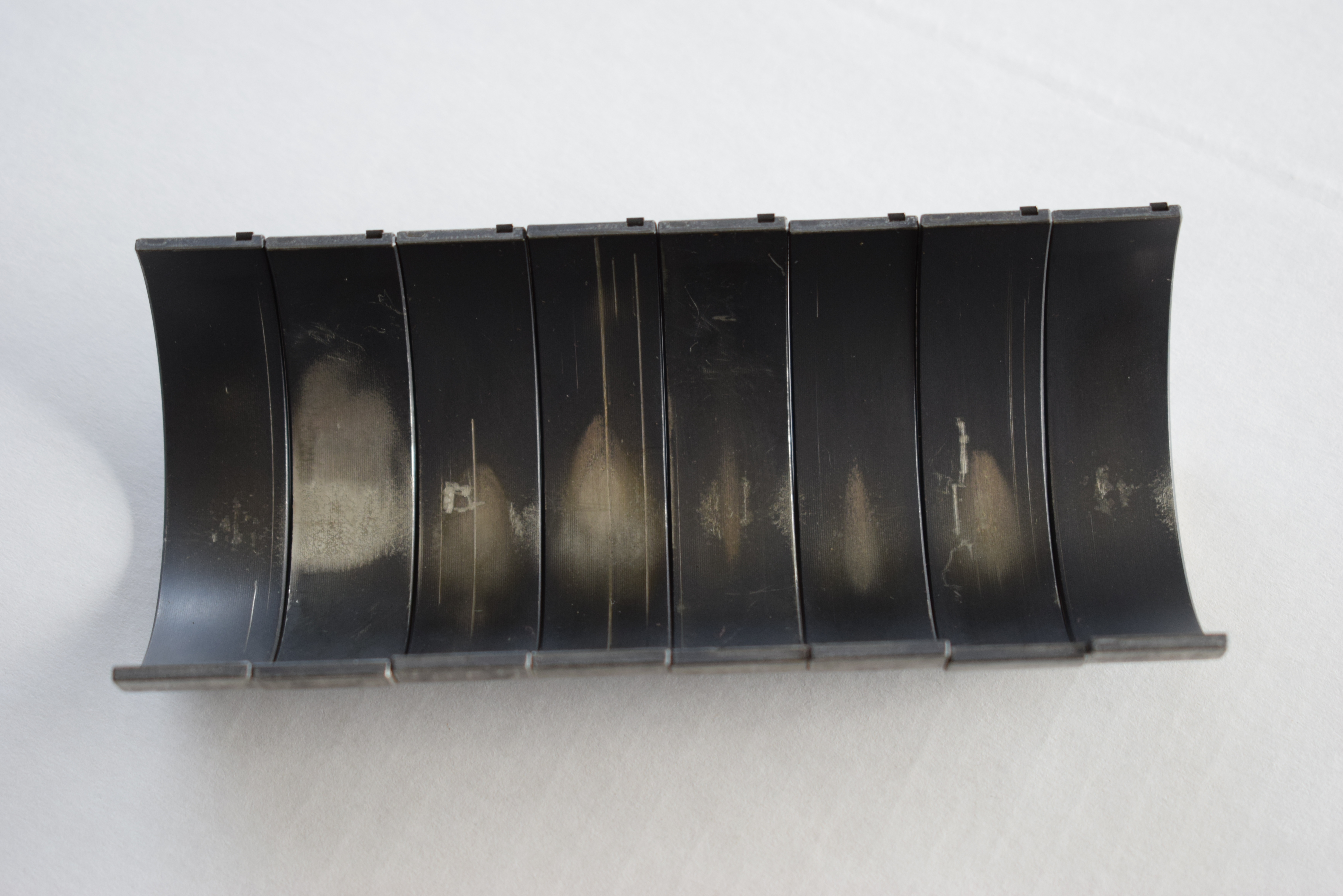
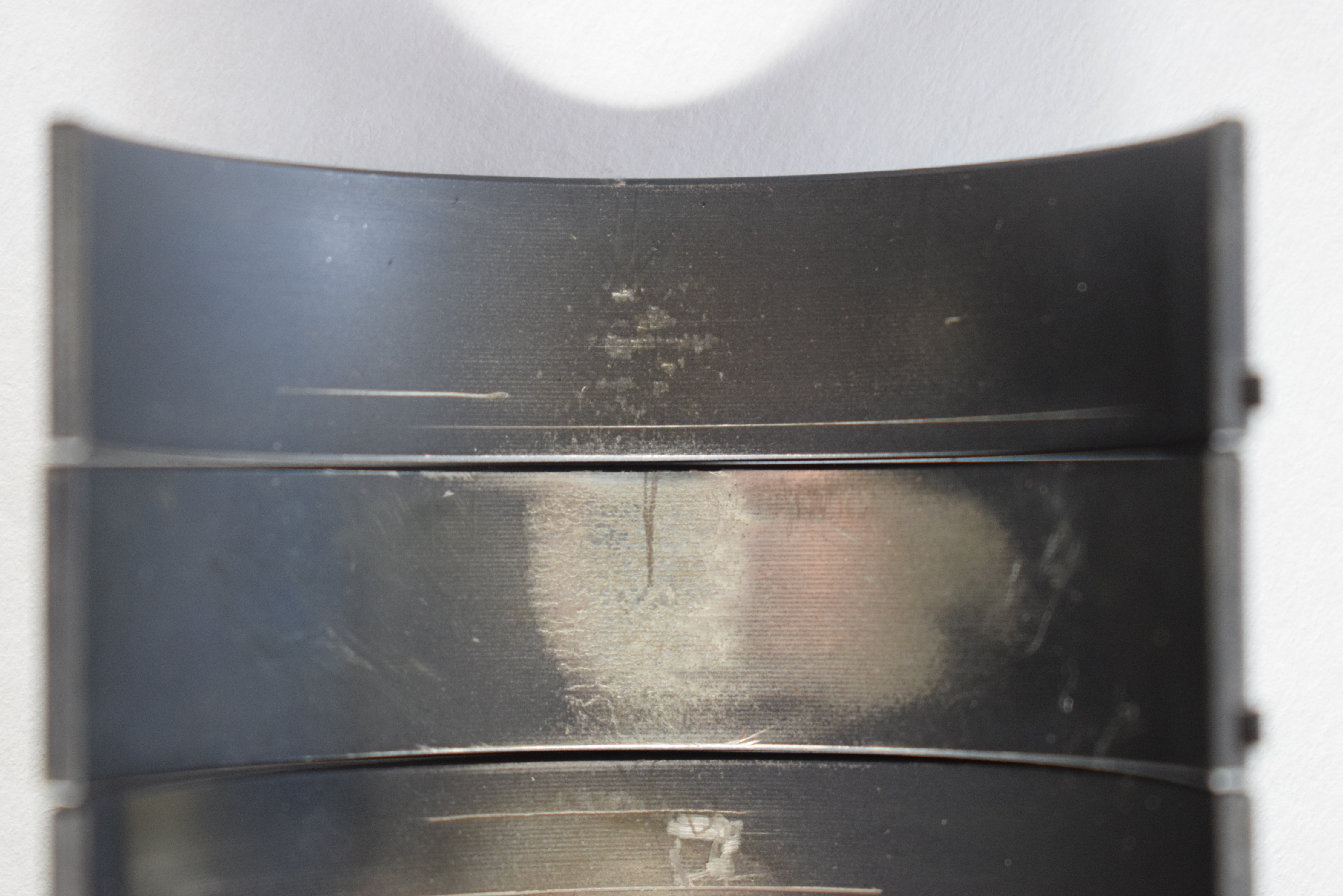
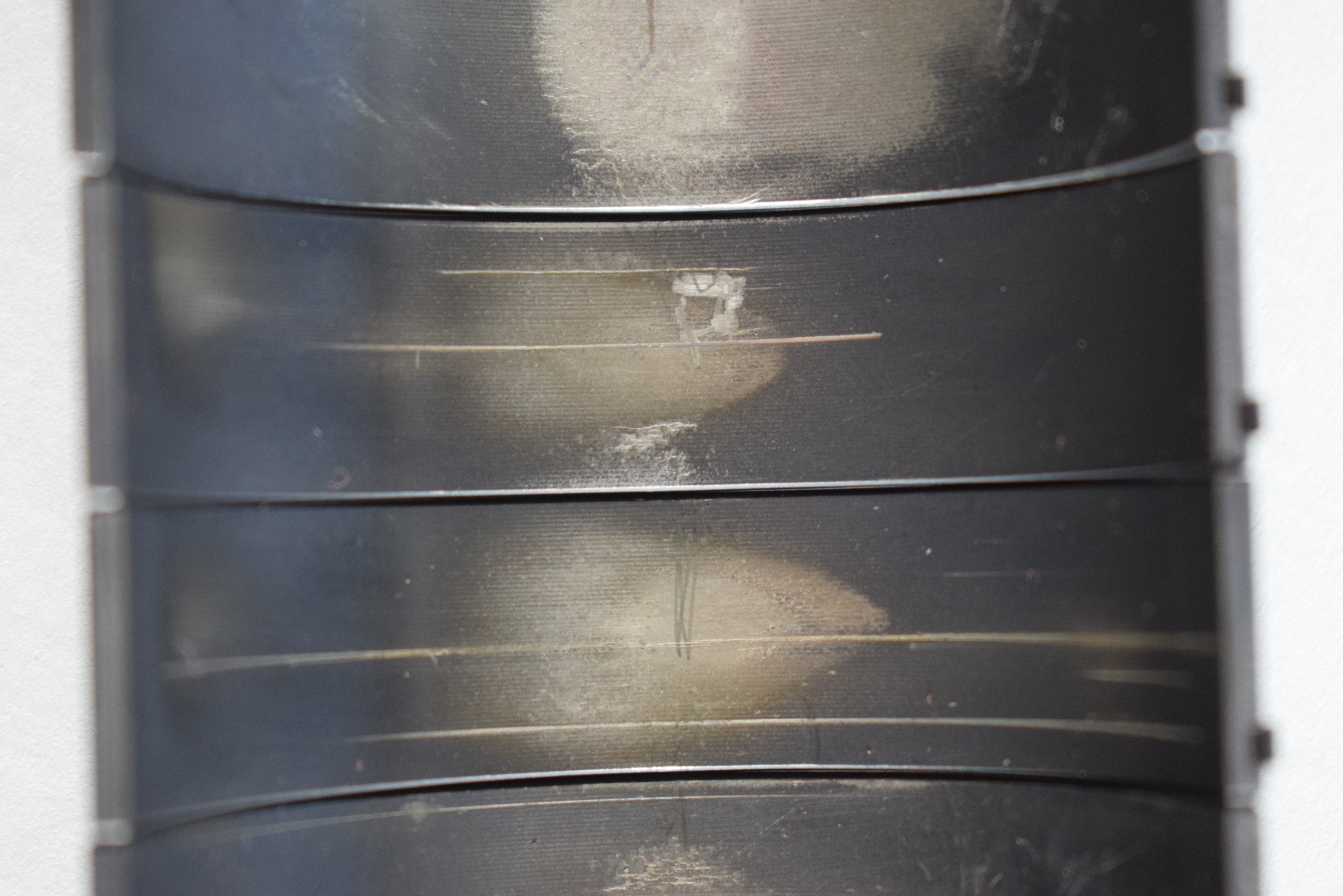
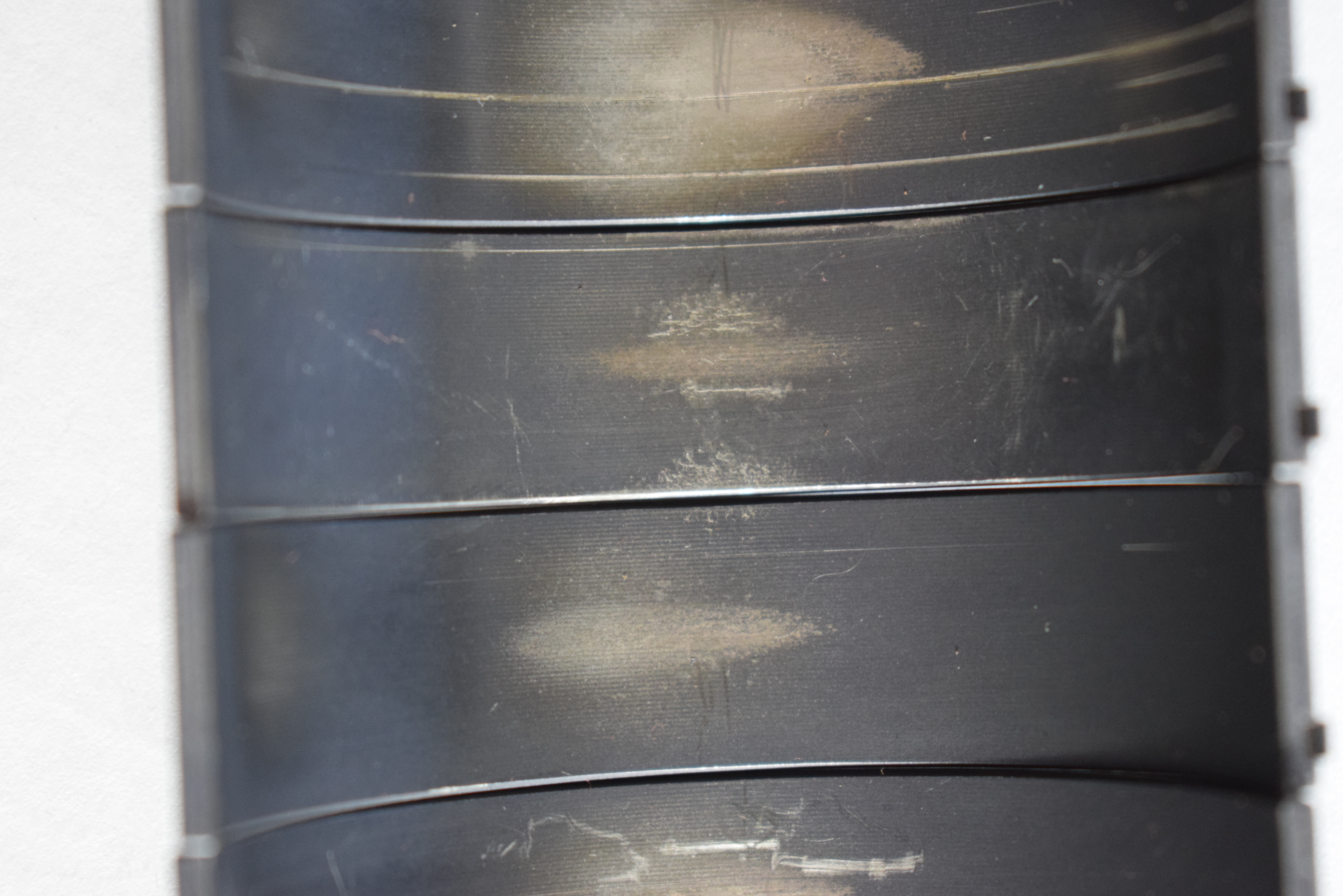
These engines that suffer most from "tolerance stacking" are the engines that pop early on. The variance in end assembly clearances are why we see some engines fail after 100k miles and some fail early on. I believe this is a clearance issue at the core and that's why every S65 bearing I've ever seen has had unacceptable wear. It's not a usage or maintenance issue. I believe it goes back to a clearance that was too tight to begin with being exacerbated by tolerance stacking.

Appreciate 8
      01-04-2018, 06:58 PM   #360
dv13
New Member
11
Rep
19
Posts

Drives: 2011 e90 m3
Join Date: Mar 2017
Location: NOVA

iTrader: (0)

Thank you and this makes sense as an explanation for how some engines from the factory could end up with tighter than spec clearances. Assuming there is no change after thousands of miles of operation, this should be evident if one measures the clearances upon taking the engine apart to replace bearings. Is that true?

While I can see how tolerance stacking could explain these issues, without measurements at assembly time and repeat measurement at bearing replacement time, how can it be any more than a theory wrt the root cause?

I'm still unclear on how can we be sure that tolerance stacking is the source of the issue and not some change in the clearance while operating the engine over time and under varied conditions?

Also, can you explain how we take these known tighter than spec clearance engines (presumably due to stacking), replace the bearings with a replacement part that should yield the same clearance as spec and the consistent result is no wear after thousands of miles? Shouldn't we see a roughly 50/50 ratio of pristine and worn bearings due to the same variability in the replacement part size (at the micro level)? Is the technician who does the bearing replacement more precise/better than the BMW technician who originally set the bearings in the factory? Definitely possible, but likely? Or is some other factor involved?

Thank you!


Quote:
Originally Posted by deansbimmer View Post
There's a point that seems to be getting lost to some seeing as the same question is being asked and the same points are being argued over and over. Tolerance stacking is a very real issue in all precision assemblies, but I'm not sure many posting here actually know how it relates to the issue at hand so I want to discuss it briefly.

When an engine is assembled by a low volume engine builder or race shop, each component is measured and compared against a blueprint or pre-determined specification. If the spec is not met, each part is adjusted until all dimensions are exactly as required (or at least as close as possible, machine accuracy deteriorates at a certain point).

At the BMW factory, perfectly identical dimensions are not repeatable down to the thousandth of an inch when cranking out thousands of engines. So parts such as journals and bores are machined to a designed tolerance of a few hundredths or thousandths of an inch depending on the part. They do a decent job of identifying size of some parts and grouping them with proper mating parts (main bearing shells for example), but they do not measure each individual part as the engine is assembled and go back and forth between the machine shop to fine tune dimensions. Neither do they "size bin" like-sized parts and pick and choose from lots to select parts that yield the best assembled fit.

As a result, it is inevitable that we will get a crankshaft with a journal that may measure on the larger side of what they deem acceptable, but is still used. Add a connecting rod with a bore that may be a couple thousandths on the smaller side, or a bearing shell that is .0001-.0002" thicker than others, and suddenly we've got a rotating assembly that is on the tighter side of what should be acceptable as a whole. Or, too tight altogether if compared to some existing industry standard. But wait there's more! Throw in human error and hardware like rod bolts that may induce bore distortion and then you've got a double whammy.

These engines that suffer most from "tolerance stacking" are the engines that pop early on. The variance in end assembly clearances are why we see some engines fail after 100k miles and some fail early on. I believe this is a clearance issue at the core and that's why every S65 bearing I've ever seen has had unacceptable wear. It's not a usage or maintenance issue. I believe it goes back to a clearance that was too tight to begin with being exacerbated by tolerance stacking.

Appreciate 0
      01-04-2018, 08:06 PM   #361
deansbimmer
BimmerPost Supporting Vendor
deansbimmer's Avatar
4324
Rep
3,023
Posts


Drives: 2011 E93 M3
Join Date: Nov 2014
Location: DFW, Texas

iTrader: (17)

Garage List
1988 E30 M3  [0.00]
2006 E46 M3  [0.00]
2024 X7 M60i  [0.00]
2011 BMW M3  [0.00]
Engines still alive that have had their bearings replaced gained visible bearing wear over 40-50-60 thousand miles, or more. The top bearing layer (babbit) that we see eroded over that period is very thin. So most S65's are removing material measured in the hundred thousandths of an inch over that period. Since we don't know the starting dimension of the journal/bearing when the engine was born, we can't know how long it took to wear away .xxxx" amount of bearing material.


So....You're not likely to see any visible wear in the few replacement rod bearings we've seen pulled after usage of a few thousand miles. Once we see a larger sample pool of no-wear bearings removed after similar mileage as the ones they replaced, then we can modify the theory at that point.. Anecdotally, new OEM/WPC, VAC, BE, ETC bearings should result in some kind of increased clearance, even if only .0001 difference...

Since we can't measure bearing or journal condition of a failed engine, there is the inability to know at which what point a worn bearing shell will cause failure. Many of the bearings people pull look like they would cause failure at any time, but it is impossible to truly know.

Edit:
Those obsessed with determining root causes beyond any reasonable doubt will never find satisfaction on this topic. If it were easy to prove everything in black and white numbers then the class action suit against BMW would be a slam dunk for consumers. (And there would be a FAQ sticky at the top of the forum instead of countless new threads on the topic).

Last edited by deansbimmer; 01-04-2018 at 08:16 PM..
Appreciate 0
      01-04-2018, 08:47 PM   #362
Scharbag
Colonel
Scharbag's Avatar
Canada
2795
Rep
2,188
Posts

Drives: 2011 E92 M3
Join Date: Oct 2017
Location: Victoria

iTrader: (0)

Garage List
2011 BMW E92 M3  [0.00]
Quote:
Originally Posted by ksteckba View Post
They did change the clearance actually.
When was this exactly?
__________________

2011 E92 M3 - 6MT, ZCP, ZF LSD, ESS G1, Some other goodies...
Appreciate 0
      01-04-2018, 08:52 PM   #363
pbonsalb
Lieutenant General
7679
Rep
13,759
Posts

Drives: 18 F90 M5, 99 E36 M3 Turbo
Join Date: Feb 2011
Location: New England

iTrader: (4)

As I recall, BE measured the old lead and new aluminum bearings and found very slight differences. I am not sure there was a clearance specification change or whether the difference was just within expected tolerance variations.
Appreciate 0
      01-04-2018, 09:51 PM   #364
deansbimmer
BimmerPost Supporting Vendor
deansbimmer's Avatar
4324
Rep
3,023
Posts


Drives: 2011 E93 M3
Join Date: Nov 2014
Location: DFW, Texas

iTrader: (17)

Garage List
1988 E30 M3  [0.00]
2006 E46 M3  [0.00]
2024 X7 M60i  [0.00]
2011 BMW M3  [0.00]
Quote:
Originally Posted by pbonsalb View Post
As I recall, BE measured the old lead and new aluminum bearings and found very slight differences. I am not sure there was a clearance specification change or whether the difference was just within expected tolerance variations.
Yes, the difference is so minute that calling them improved seems more for discussion than any real world solution.
Appreciate 0
      01-04-2018, 10:07 PM   #365
ashtaron14
Major
ashtaron14's Avatar
Hong Kong
1176
Rep
1,082
Posts

Drives: G80 M3
Join Date: Jun 2011
Location: HK

iTrader: (0)

Quote:
Originally Posted by deansbimmer View Post
These engines that suffer most from "tolerance stacking" are the engines that pop early on. The variance in end assembly clearances are why we see some engines fail after 100k miles and some fail early on. I believe this is a clearance issue at the core and that's why every S65 bearing I've ever seen has had unacceptable wear. It's not a usage or maintenance issue. I believe it goes back to a clearance that was too tight to begin with being exacerbated by tolerance stacking.
So what you're saying is that all factory S65 will blow their rod bearings at some point, and the "when" is going to be dependent on luck of the draw?

Awesome!
__________________
Appreciate 0
      01-04-2018, 10:59 PM   #366
Green-Eggs
Lieutenant Colonel
United_States
1483
Rep
1,613
Posts

Drives: BMW
Join Date: Jul 2007
Location: Los Angeles

iTrader: (3)

Quote:
Originally Posted by dv13 View Post
Thank you and this makes sense as an explanation for how some engines from the factory could end up with tighter than spec clearances. Assuming there is no change after thousands of miles of operation, this should be evident if one measures the clearances upon taking the engine apart to replace bearings. Is that true?
Yes, this is true, and in fact this has already been done a few times. The tolerances on disassembled motors were measured and found to be below industry standards. This is exactly where and how a clearance issue was first discovered.

Quote:
While I can see how tolerance stacking could explain these issues, without measurements at assembly time and repeat measurement at bearing replacement time, how can it be any more than a theory wrt the root cause?
It's a hypothesis that seems to fit all the known evidence. But you're right, nobody will know with 100% certainty. There are however cross-checks to verify the hypothesis. 1) You see bearing failure guides by Clevite and King (both very large bearing manufacturers). Both have photos to show excessive bearing wear due to insufficient clearance. Those pictures in the failure guides look very similar, some would say identical, to the photos of bearings we see coming out of S65 engines. 2) Knowing the measured clearances in the S65 are indeed smaller than industry standards, especially given the oil viscosity. 3) Bearing design guides by Clevite describing the pro's and con's of small oil clearance. Clevite makes it very clear that for high RPM, high output engines, you need extra clearance, not less. Clevite also makes it clear that if an engine uses tight clearances, it must be matched with an equally light weight oil. 10W60 is a very heavy weight oil and the clearance is very tight. 4) Using a specially instrumented test vehicle to measure and data log thousands of miles of oil pressure, temperature, oil flow, RPM, etc. at 10 samples per second. Thousands of miles were logged using factory bearings, then an equal number of miles were logged using BE Bearings. Oil pressure dropped about 2-3 PSI (from 76 PSI to 73 PSI), but oil flow more than doubled. If you look at the last graphs on this page (http://www.m3post.com/forums/showthread.php?t=1337998), you will see at max RPM, oil flow with BE Bearings was more than 4x than factory bearings. If increased oil flow is bad, let somebody explain why -- in specific detail, not fear, uncertainty, and doubt like they always have before.

These are all cross-checks used to validate a hypothesis. I'm sure there's a few more I'm missing.

You see others claiming this is broken logic, even pretzel logic. That's certainly not the case. Tolerance stacking is by far the simplest explanation, and one which seems to cover all the given evidence and all the known cases. The irony in some comments above were the description of tolerance stacking as a likely cause of failures. He didn't call it that, but that's what he described. Pretty ironic.

Quote:
I'm still unclear on how can we be sure that tolerance stacking is the source of the issue and not some change in the clearance while operating the engine over time and under varied conditions?
The rod journal diameter doesn't change over time (at least not without being damaged). As Dean mentioned above, the babbitt layer is very thin. Even if it were to wear off, the clearance would increase, not decrease. The bearing pictures all seem to show signs of too little clearance. It's just a hypothesis, but tolerance stacking seems to be the most likely cause of early engine failures.

Quote:
Also, can you explain how we take these known tighter than spec clearance engines (presumably due to stacking), replace the bearings with a replacement part that should yield the same clearance as spec and the consistent result is no wear after thousands of miles? Shouldn't we see a roughly 50/50 ratio of pristine and worn bearings due to the same variability in the replacement part size (at the micro level)? Is the technician who does the bearing replacement more precise/better than the BMW technician who originally set the bearings in the factory? Definitely possible, but likely? Or is some other factor involved?

Thank you!
You are correct, it's a gamble when you replace with factory bearings. There have been one or two reports of people blowing motors shortly after they changed their bearings with factory, or WPC treated factory bearings. It's always a gamble to introduce a new technician into the reliability of the engine. That's why it's best to use a shop that has a good reputation with meticulous-to-detail technicians.
Appreciate 2
Bartledoo2708.00
      01-04-2018, 11:00 PM   #367
Green-Eggs
Lieutenant Colonel
United_States
1483
Rep
1,613
Posts

Drives: BMW
Join Date: Jul 2007
Location: Los Angeles

iTrader: (3)

Quote:
Originally Posted by pbonsalb View Post
As I recall, BE measured the old lead and new aluminum bearings and found very slight differences. I am not sure there was a clearance specification change or whether the difference was just within expected tolerance variations.
http://wiki.rcollins.org/core/index....2F089_Bearings

vs.

http://wiki.rcollins.org/core/index....2F703_Bearings
Appreciate 0
      01-04-2018, 11:20 PM   #368
anerbe
Lieutenant Colonel
124
Rep
1,567
Posts

Drives: Red E90M 6MT
Join Date: Dec 2006
Location: BH, MI

iTrader: (2)

Quote:
Originally Posted by Green-Eggs View Post
Saying they are "significantly worn" is not remotely true. Due to the angle of the photo, that could be barely worn at all; and in fact looks like it's barely worn at all.


I know you've been around long enough to know those bearings were using bolts with bore distortion. The bore distortion gives extra clearance at 90-degrees. I guess I'm wondering why this keeps being shown as if it has any meaning as a valid comparison -- when it doesn't.

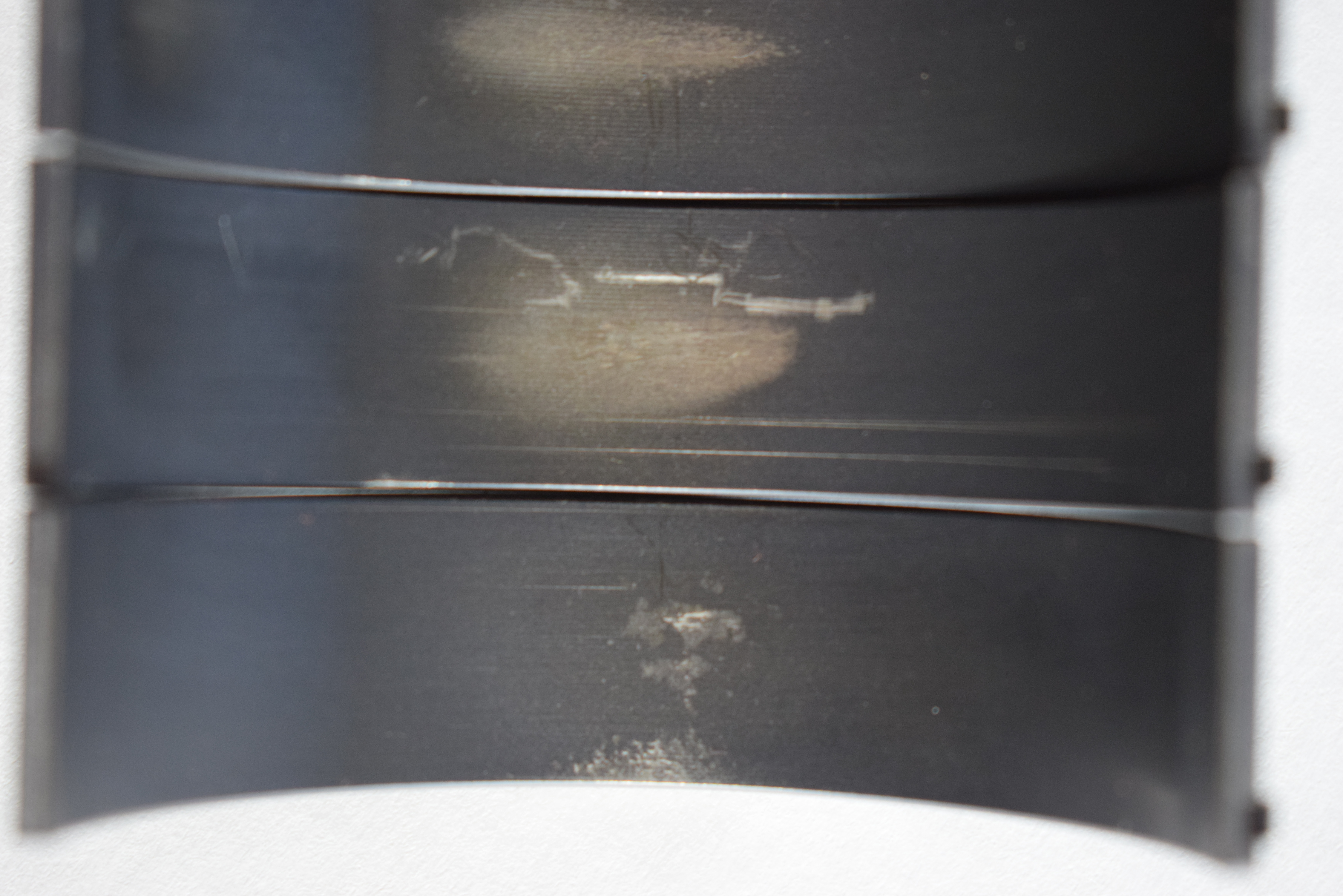
For those wondering, here's what a set of these SAME bearings look like @ 1500 miles using OEM bolts with no bore distortion. This is an NA motor. If you want to see excessive wear for the mileage, and the coating significantly worn off, I think this more than fits the definition.

Click photos for enlarged images.


See above. Both are PTFE coating. But as mentioned earlier, most race shops quit using Calico years ago due to quality control issues.


It's not the same wear near parting lines as we see with factory bearings. Factory bearings are often heavily worn or damaged right at the parting line. These look like very mild wear about 3/8 inch above the parting lines.

Unless there are two different V10's with BE Bearings pulled and shown, as mentioned earlier, the shop thought these looked so good they reinstalled them. I believe they also mentioned this was the first time they've ever seen bearings good enough to reinstall. So odd that one or two people think these are trashed, but the ones I've shown above -- using OEM rod bolts and the absence of bore distortion -- are never acknowledged.


So...not the fault of the bearings. Good to know.


And they always consistently manage to use the same example of rod bolts with bore distortion. I believe that flawed comparison has been pointed out every time it comes up. So what are the chances that it keeps coming up, and why does it keep coming up? I stopped believing in these coincidences a long time ago.
I'm just trying to use known info/facts, not posting/omitting some info to serve an agenda.

1. Your pics of the VAC bearings are coated OEM 702 bearings with OEM bolts. Same factory assembly process with less than factory clearances. Im not too surprised on the wear pics. Yet you say this should be better than the 30k mile bore distorted APR bolt sample with the same 702 coated bearings, as it's using better bolts. Don't see it in the pics, nor get the point. Nobody thinks 702 coated bearings are the way to go in general.

2. So the S85 pic is agreed it's not the fault of the bearings. Good. Must be the bolts and/or assembly by deductive reasoning unless there was some issue with the bearing uniformity (I doubt) or rod/crank deformity. Normal wear should have more wear center of the bearing, decreasing towards parting lines. Having wear focused at parting line stated from Mahle manual either as excessive crush or out of round bore. The s85 Sample had 1500 miles - I'm not sure the wear would have subsided adding 50k miles.

Look, I also don't have anything against BE, and I welcome the analysis. I am sure BE bearings are the best option to open clearances. However, I'm still not sold that 1. OEM bolts/procedure are the best (both OEM 702 coated and BE had some instances of wear using OEM bolts), and 2. VAC extra clearance + APR are that subpar (have yet to see VAC extra clearance + APR bolt pics).

If I had to buy bearings now, id buy BE bearings with apr bolts, even with your submissive tone and heavily biased responses as if I'm trying to sabotage BE.
Appreciate 0
      01-04-2018, 11:56 PM   #369
Green-Eggs
Lieutenant Colonel
United_States
1483
Rep
1,613
Posts

Drives: BMW
Join Date: Jul 2007
Location: Los Angeles

iTrader: (3)

Quote:
Originally Posted by anerbe View Post
I'm just trying to use known info/facts, not posting/omitting some info to serve an agenda.

1. Your pics of the VAC bearings are coated OEM 702 bearings with OEM bolts. Same factory assembly process with less than factory clearances. Im not too surprised on the wear pics. Yet you say this should be better than the 30k mile bore distorted APR bolt sample with the same 702 coated bearings, as it's using better bolts. Don't see it in the pics, nor get the point. Nobody thinks 702 coated bearings are the way to go in general.
No, I'm saying something quite a bit different. The VAC bearing photos shown came from this thread:
http://www.m3post.com/forums/showthread.php?t=1073979

First a quick correction though: Unlike some have said, it wasn't 33500 supercharged miles. It was 33500 NA miles, then another 4500 supercharged miles. The installation was on Calico coated (VAC) 702/703 bearings, not the newer VAC/Clevite bearings. The ARP rod bolts were used that have demonstrated bore distortion. Graphs of the bore distortion with these bolts can be found here:
http://wiki.rcollins.org/core/index....2000_rod_bolts

When you look at these compared to the reference sample of OEM rod bolts in the same connecting rods, you will see 1) an extra 0.00070 inch bore distortion (extra clearance) on virgin connecting rods, and 2) an extra 0.00120 inch bore distortion (extra clearance) on remanufactured connecting rods.

People have repeatedly pointed to these photos as "proof" that the VAC solution of coated bearings works. The only "proof" I see there is that rod bolts with incorrect clamping force were used that clearly affect the clearance and the outcome. Therefore the comparison is mostly invalid, if not completely invalid. If you look at other "condition example" photos of the same type of bearings, you'll see they all used the same ARP bolt with improper clamping force. Those photos too would be an invalid comparison.

My point is there's only one apples-to-apples comparison of the VAC coated 702 bearings that didn't use an improperly clamped rod bolts: it's the photos I posted of the bearings with 1500 miles on them. My shop pulled those bearing, and that's what we found after 1500 miles. It is my opinion, those are the only valid comparison photos on the forum.

Quote:
Look, I also don't have anything against BE, and I welcome the analysis. I am sure BE bearings are the best option to open clearances. However, I'm still not sold that 1. OEM bolts/procedure are the best (both OEM 702 coated and BE had some instances of wear using OEM bolts), and 2. VAC extra clearance + APR are that subpar (have yet to see VAC extra clearance + APR bolt pics).
For scientific methods, OEM bolts have to be the control in any test anyways -- against all others are measured. As it turns out, when torqued correctly, the BE rod bolt tests showed the OEM bolts with very consistent clamping force. They always produced a near-perfect round connecting rod bore.

We've sold the VAC/Clevite bearings to people that wanted OEM clearance. It's a very good product for that purpose. That's why I've said if you don't believe there's a clearance problem, this would be my choice. If you do believe there's a clearance problem, this wouldn't be my choice.
Appreciate 0
      01-05-2018, 12:02 AM   #370
Bartledoo
Driver
Bartledoo's Avatar
2708
Rep
2,715
Posts

Drives: 2011 E90 M3 6MT
Join Date: Aug 2015
Location: Seattle, WA

iTrader: (0)

Garage List
Quote:
Originally Posted by Green-Eggs View Post
...

You see others claiming this is broken logic, even pretzel logic. That's certainly not the case. Tolerance stacking is by far the simplest explanation, and one which seems to cover all the given evidence and all the known cases. The irony in some comments above were the description of tolerance stacking as a likely cause of failures. He didn't call it that, but that's what he described. Pretty ironic.

....
Right?! I laughed when I read SP's post basically agreeing with the people he's been arguing against for so long!! It's almost as if he agreed all along but didn't realize what was being argued.
__________________
E90M 6MT Slicktop Single Humper in need of a diet
Appreciate 0
      01-05-2018, 12:04 AM   #371
Green-Eggs
Lieutenant Colonel
United_States
1483
Rep
1,613
Posts

Drives: BMW
Join Date: Jul 2007
Location: Los Angeles

iTrader: (3)

Quote:
Originally Posted by ksteckba View Post
Right?! I laughed when I read SP's post basically agreeing with the people he's been arguing against for so long!! It's almost as if he agreed all along but didn't realize what was being argued.
Appreciate 0
      01-05-2018, 04:52 AM   #372
Sneaky Pete
First Lieutenant
156
Rep
332
Posts

Drives: M car
Join Date: Jan 2016
Location: Wild blue yonder

iTrader: (0)

Quote:
Originally Posted by ksteckba View Post
Right?! I laughed when I read SP's post basically agreeing with the people he's been arguing against for so long!! It's almost as if he agreed all along but didn't realize what was being argued.
That's a little disappointing...I didn't have you down as being a bit of a dick...ah well at least you have company.
Anyway what is it *you* think that I'm supposed to be "agreeing" [with the people he's been arguing against all along]?

Also, maybe you know why BE go so much out of their way to knock a competitor's product?...a lack of confidence in their own product or just a lack of integrity?

Finally on a broader note....given that new BE extra clearance bearings already cause an oil pressure drop, I'm surprised that buyers aren't more concerned that as the coating wears off this will only would further reduce the oil pressure compromising the oil flow through the Main bearings.
It will certainly be interesting to see how instances of main bearing failures increase in engines that have had extra clearance RB bearings fitted.

Last edited by Sneaky Pete; 01-05-2018 at 06:45 AM..
Appreciate 0
      01-05-2018, 09:15 AM   #373
doogee
Major
doogee's Avatar
770
Rep
1,263
Posts

Drives: '08 M3, '09 328xi Sport Wagon
Join Date: Oct 2008
Location: Ancaster, ON, Canada

iTrader: (0)

Quote:
Originally Posted by IanMan View Post
I'll repeat myself. If there wasn't a clearance issue, then why did BMW update S65 and S85 bearings with a bigger clearance....
Not sure where you're getting this, but this isn't the case. There was a material change, clearance remained nearly identical.


Quote:
Originally Posted by dv13 View Post
I for one would be interested in seeing this, so please share!
We'll see. I'm pretty turned off of the idea and feel the example wouldn't be of any help because of the bias on here.


Quote:
Originally Posted by ashtaron14 View Post
So what you're saying is that all factory S65 will blow their rod bearings at some point, and the "when" is going to be dependent on luck of the draw?
Main bearings as well.


Quote:
Originally Posted by Sneaky Pete View Post
Finally on a broader note....given that new BE extra clearance bearings already cause an oil pressure drop, I'm surprised that buyers aren't more concerned that as the coating wears off this will only would further reduce the oil pressure compromising the oil flow through the Main bearings.
It will certainly be interesting to see how instances of main bearing failures increase in engines that have had extra clearance RB bearings fitted.
I suppose it would be ideal if BE would share the bearing measurements without the coating. I don't know how thick it is applied.

Calicos CT-1 coating is apparently 0.00025" to 0.00030" inch. So I imagine it's similar.

Because the coating isn't going to be around for long and clearance will slowly open up even more over a period of time. In general I've heard these coatings usually last around 60,000 miles depending on the application.

I personally prefer VACs approach by using the coating as it is intended. It's a sacrificial layer that is going to wear off. This only applies to the newer custom bearings. The VAC OEM coated bearings were simply a waste of time.

Choosing a bearings particular clearance including the coating seems very strange to me. The "standard" clearance BE Bearings might be a good choice.
__________________

Last edited by doogee; 01-05-2018 at 09:47 AM..
Appreciate 0
      01-05-2018, 10:43 AM   #374
kawasaki00
Lieutenant Colonel
kawasaki00's Avatar
United_States
244
Rep
1,673
Posts

Drives: SG-E92 ESS-650 BPM Tune
Join Date: May 2012
Location: Charlotte NC

iTrader: (11)

Any coating that is meant to "come off" is a bad coating and a waste of money.
__________________
Electronics Junkie, Engine Builder.
Appreciate 1
UPSROD1399.50
Post Reply

Bookmarks


Posting Rules
You may not post new threads
You may not post replies
You may not post attachments
You may not edit your posts

BB code is On
Smilies are On
[IMG] code is On
HTML code is Off


All times are GMT -5. The time now is 05:35 PM.


m3post
Powered by vBulletin® Version 3.8.11
Copyright ©2000 - 2026, vBulletin Solutions Inc.
1Addicts.com, BIMMERPOST.com, E90Post.com, F30Post.com, M3Post.com, ZPost.com, 5Post.com, 6Post.com, 7Post.com, XBimmers.com logo and trademark are properties of BIMMERPOST