

OmairK wroteBelieve not. ECU/module "age" data needs to be cleared.I’m assuming changing struts doesn’t reset the system… will need this info soon as well. ZCP E90 6MT for context going with B6xEvolve Struts.
65.2KVIEWS
59REPLIES
45APPRECIATES
12-10-2025LAST POST
I asked my friend who’s been a BMW tech for 35+ years (he’s the lead tech at his dealership) about edc damper replacement. I asked if there’s a resetting procedure for e9x M3 edc parameters when a new edc damper(s) is(are) replaced. His reply was…he does not recall having to reset the edc module to account for the “age” of a new edc damper. He also said, there are not many M owners who have their edc dampers replaced at the dealership. However, a very large number of mostly newer 7 series models do have edc dampers replaced (under warranty) at the dealership AND they do require recoding. He said he’d verify whether new e9x M3 edc dampers require recoding to account for age, or other things, when he has time to check.
M3SQRD wroteWell your "friend" should get educated/training and look through TIS and ISTA for servicing procedures.I asked my friend who’s been a BMW tech for 35+ years (he’s the lead tech at his dealership) about edc damper replacement. I asked if there’s a resetting procedure for e9x M3 edc parameters when a new edc damper(s) is(are) replaced. His reply was…he does not recall having to reset the edc module to account for the “age” of a new edc damper. He also said, there are not many M owners who have their edc dampers replaced at the dealership. However, a very large number of mostly newer 7 series models do have edc dampers replaced (under warranty) at the dealership AND they do require recoding. He said he’d verify whether new e9x M3 edc dampers require recoding to account for age, or other things, when he has time to check.
https://www.m3post.com/forums/showpost.php?p=30013077&postcount=9
To be fair, I didn't notice any difference. But the exception isn't the rule (nor the correct procedure).
RocketyMan wroteWhere does it state that this is a procedure that resets damping deterioration? The description talks about using different edc modes. I asked him a very specific question.Well your "friend" should get educated/training and look through TIS and ISTA for servicing procedures.
https://www.m3post.com/forums/showpost.php?p=30013077&postcount=9
To be fair, I didn't notice any difference. But the exception isn't the rule (nor the correct procedure).
Whenever new EDC shocks are replaced, they must be "reset."
RocketyMan wroteCoding a damper doesn’t necessarily mean it’s “resetting” a deterioration algorithm. Most things on a BMW needs to be recoded when replacing a part.Whenever new EDC shocks are replaced, they must be "reset."
I’ll have a copy of BMW’s EDC damper replacement instructions soon. I’ll scan them in once I get them (shop computers for techs can’t create pdf files). However, the edc damper replacement instructions state to code the vehicle only when the edc module is replaced, not when an edc damper(s) is replaced. I’ve asked him to look at ABL-DIT-S3715_65STOSS to see if individual damper coding is required, why if damper coding is required, and whether it supersedes the edc damper replacement procedure.
He’s busy repairing B58 engines from X and 7 series - spring on #6 cylinder fail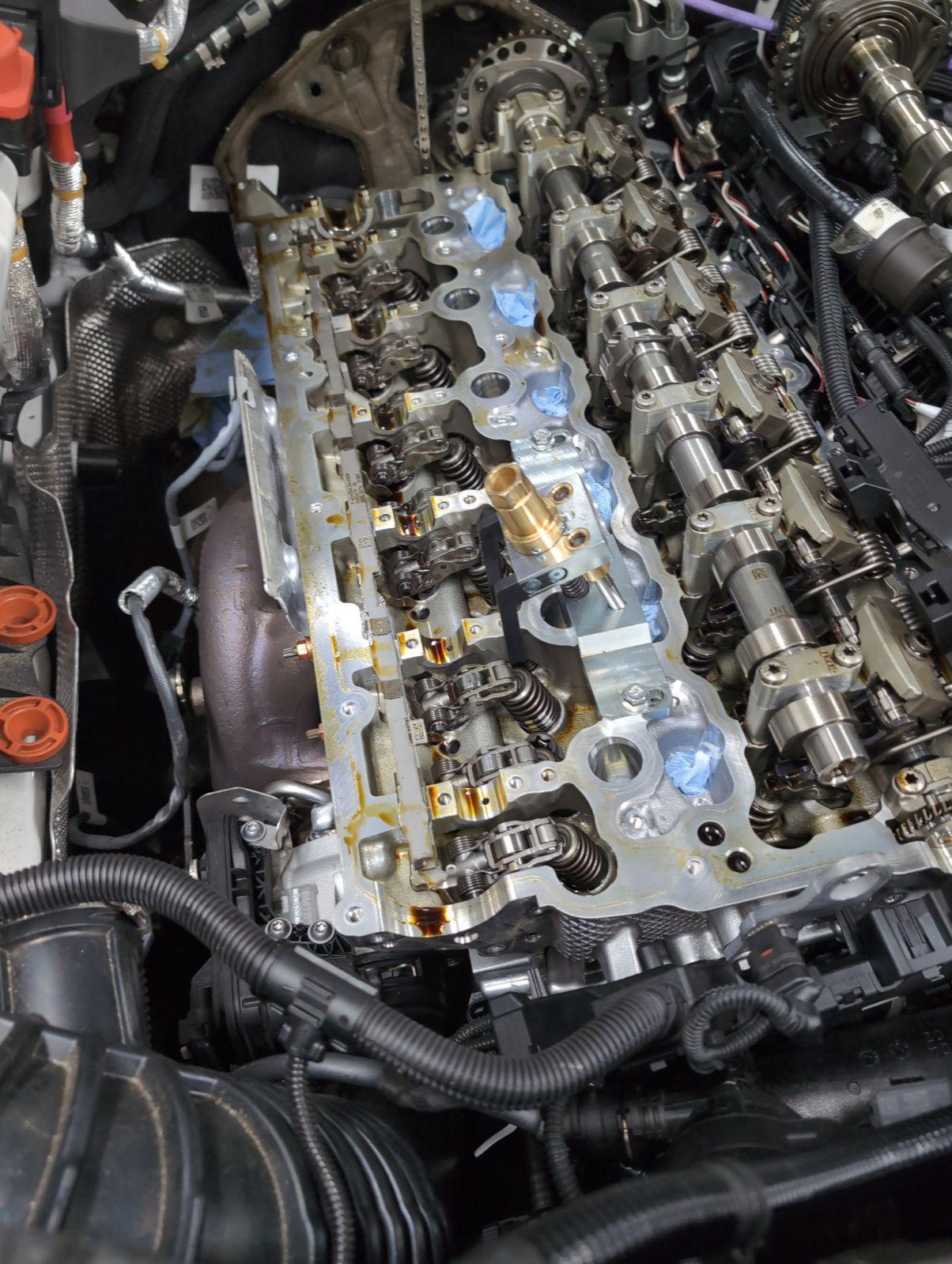
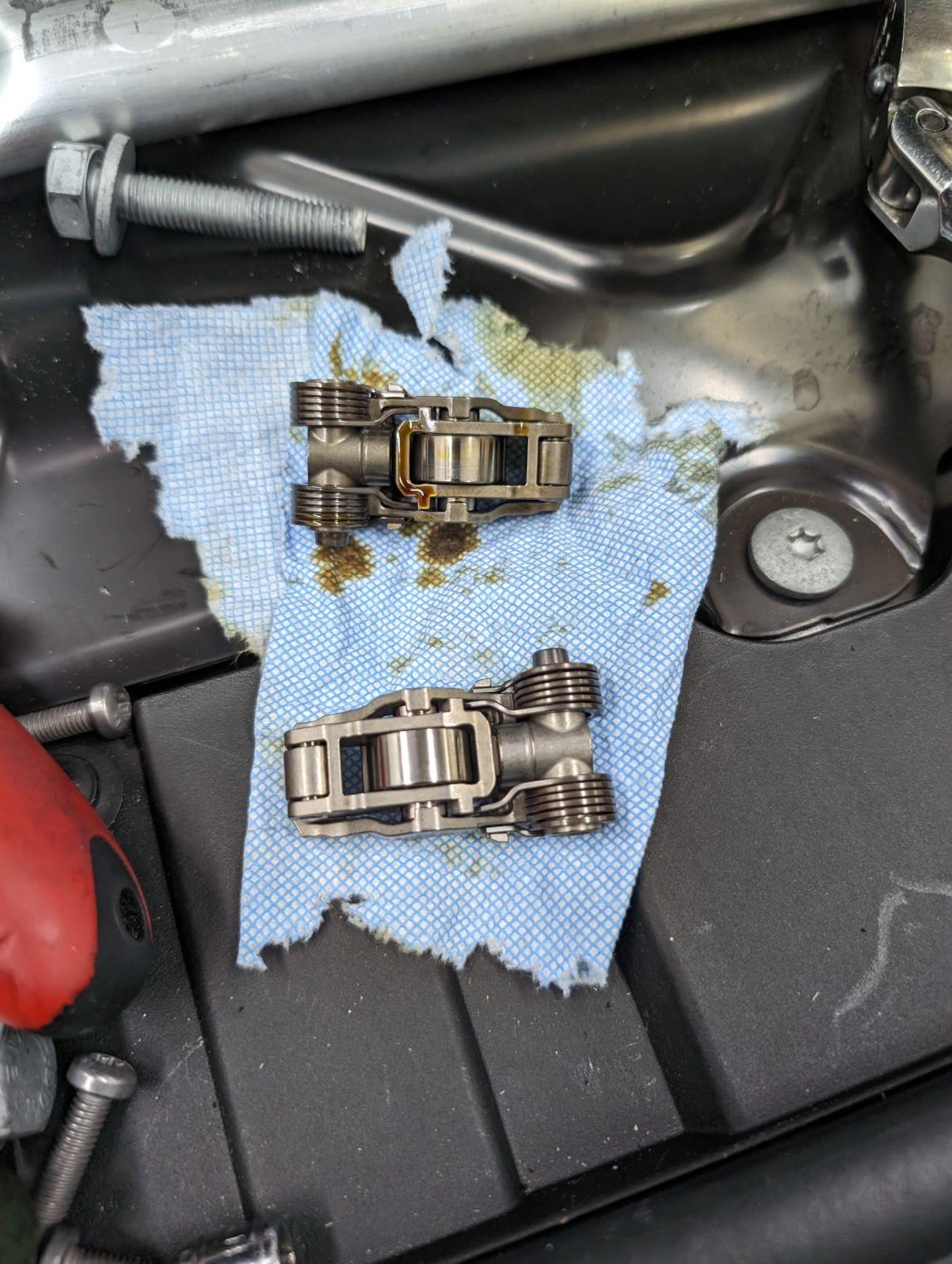
He’s busy repairing B58 engines from X and 7 series - spring on #6 cylinder fail
M3SQRD wroteNo clue about coding here mate but I'd assume discussed "compensation for aging" is about lowering damper current output/control with time, i.e. a counter. Guessing that wouldn't have to involve touching any fixed setting/sw. Again, pure assumptions here, appreciate your mates input.I’ll have a copy of BMW’s EDC damper replacement instructions soon. I’ll scan them in once I get them (shop computers for techs can’t create pdf files). However, the edc damper replacement instructions state to code the vehicle only when the edc module is replaced, not when an edc damper(s) is replaced. I’ve asked him to look at ABL-DIT-S3715_65STOSS to see if individual damper coding is required, why if damper coding is required, and whether it supersedes the edc damper replacement procedure.
He’s busy repairing B58 engines from X and 7 series - spring on #6 cylinder fail
Cheers
Helmsman wroteAre you saying “compensation for aging” is a decrease in current output and, therefore, a decrease in voltage output (increase in damping force output due to a more closed damper valve)? I know 0 V is equal to max damping force (max closed damper valve) but it’s variable with piston velocity. Have you applied the same V to new and old edc dampers on a shock dyno and measured different damping rates (different force-velocity curves = damping rates)? Not sure how you could do something like this in a car without a data acquisition system recording V, piston velocity and damping force and, even with these data points, it’ll be impossible to repeat the same driven route.No clue about coding here mate but I'd assume discussed "compensation for aging" is about lowering damper current output/control with time, i.e. a counter. Guessing that wouldn't have to involve touching any fixed setting/sw. Again, pure assumptions here, appreciate your mates input.
Cheers
M3SQRD wroteHas nothing to do with coding. That's the wrong use of that word. Like mentioned before me, it's about resetting the "aging" calculation in the module of the dampers themselves.Coding a damper doesn’t necessarily mean it’s “resetting” a deterioration algorithm. Most things on a BMW needs to be recoded when replacing a part.
Coding has to deal with parameterization/configuration of the vehicle/unit. In this case, you can "code-out" EDC by effectively disabling it via parameterization.
Resetting, in this case, has to deal with the stored values of those characteristic curves. A similar analogy is like resetting the "adaptions" of various components--like O2 readings.
I listed the procedure through a hyperlink in my initial response to you. Did you read the screenshot?
"The procedure for matching the [mileage] must be carried out after replacing the control unit [EDC module] or replacing the shock absorber."
 RocketyMan
Coding - got it. I was incorrectly using coding.
This is a real question - Where is there a source that discusses EDC module and/or EDC dampers being adjusted to account for age/mileage and/or loss of damping force over time? Is “matching the mileage” the only mention of mileage and/or age related to EDC? I have not been able to find any other reference to, or mention of, an edc age/mileage reset and/or algorithm. I’ve even tried searching for age/mileage compensation of other EDC/MR damping systems, including even academic papers. You can find information on EDC systems but nothing related to loss of performance compensation.
M3SQRD wroteNo fancy testsystems here mate but yes. I can't see anything else that can influence the shocks other than the built in fluid valve and its control current.Are you saying “compensation for aging” is a decrease in current output and, therefore, a decrease in voltage output (increase in damping force output due to a more closed damper valve)? I know 0 V is equal to max damping force (max closed damper valve) but it’s variable with piston velocity. Have you applied the same V to new and old edc dampers on a shock dyno and measured different damping rates (different force-velocity curves = damping rates)? Not sure how you could do something like this in a car without a data acquisition system recording V, piston velocity and damping force and, even with these data points, it’ll be impossible to repeat the same driven route.
(BTW what I've simply done is to hang in a amp meter while driving, see YT videos previously in this thread).
I guess one could arrange a simple data acquisition system logging current and whatever sensors impacting the EDC output current such as stearing wheel angel, speed, acc sensors. But again, the current measurement is what I've done. Hence when folks (here) started to talk about the aging compensation I thought I measure current before and after clearing adaptations. Turns our ProTool doesn't support this yet, discussing this with them though so lets see.
Edit: Heres one of the threads I read. Found that really interesting since I've tryed to understand my EDCs behavour for quite some time: https://www.m3post.com/forums/showthread.php?t=1941136&page=2
 Helmsman
Thanks for the link.
I tried searching site: m3post.com “search”
where “search” was anything related to time, mileage, compensation, etc. Literally tried 40+ individual search terms and combo of search terms without a useful hit.
Full disclosure: my ‘09 e92M3 had its EDC dampers replaced with conventional 2-way dampers after 3k miles because I did not like the suspension tuning. My (wife’s) ‘12 e92 M3 was a zcp so I could not eliminate EDC from the build and its EDC dampers were replaced after the break-in service with a conventional 1-way dampers. My ‘16 F82 was ordered without EDC. So I have very little overall experience with EDC and no experience with EDC age compensation.
From what I’ve read so far it is clear the damper current is biased with mileage and/or time. If it’s based solely on mileage then your dampers would have little age compensation applied because of your low mileage yet you’ve noticed/felt a measurable change in damper performance and/or loss/lack of edc mode performance. This suggests the age compensation is exactly that - age. However, it’s more likely a relatively simple function of mileage + time since last EDC reset.
Again,
RocketyMan and Helmsman thanks for providing information regarding EDC age compensation.
M3SQRD wroteCompletely agree, strange that so little seem to have surfaced about imo such an interesting topic. Not much to find really but never the less seem to be an actual feature, grateful to the guys who found it out and posted about it.
Thanks for the link.
I tried searching site: m3post.com “search”
where “search” was anything related to time, mileage, compensation, etc. Literally tried 40+ individual search terms and combo of search terms without a useful hit.
Full disclosure: my ‘09 e92M3 had its EDC dampers replaced with conventional 2-way dampers after 3k miles because I did not like the suspension tuning. My (wife’s) ‘12 e92 M3 was a zcp so I could not eliminate EDC from the build and its EDC dampers were replaced after the break-in service with a conventional 1-way dampers. My ‘16 F82 was ordered without EDC. So I have very little overall experience with EDC and no experience with EDC age compensation.
From what I’ve read so far it is clear the damper current is biased with mileage and/or time. If it’s based solely on mileage then your dampers would have little age compensation applied because of your low mileage yet you’ve noticed/felt a measurable change in damper performance and/or loss/lack of edc mode performance. This suggests the age compensation is exactly that - age. However, it’s more likely a relatively simple function of mileage + time since last EDC reset.
Again,
Helmsman wroteSo true. After close to two decades of EDC use, you’d think everything about the system’s operations would be known; instead, it’s still mostly speculation.Completely agree, strange that so little seem to have surfaced about imo such an interesting topic. Not much to find really but never the less seem to be an actual feature, grateful to the guys who found it out and posted about it.
M3SQRD wroteBtw speaking about data acquisition; I bought Bimmergeeks ProTool the other month. With this its possible to collect data, at least per subsystem. For instance on the DCT its possible to select from a range av various sensor and create a log file/time stamps. Comes out as a nice Excel sheet to mail back to your PC. Very neat indeed!So true. After close to two decades of EDC use, you’d think everything about the system’s operations would be known; instead, it’s still mostly speculation.
Back to the EDC there is obviously far less sensors. Guess one could log wheel sensors etc but believe its a different subsystem so tricky to align/time stamp.
Anyways, from what Ive seen so far of ProTool its a definite to have. Wish I got it earlier...
Helmsman wroteI’m not that familiar with their ProTool. I looked into one a little while ago and almost purchased one.Btw speaking about data acquisition; I bought Bimmergeeks ProTool the other month. With this its possible to collect data, at least per subsystem. For instance on the DCT its possible to select from a range av various sensor and create a log file/time stamps. Comes out as a nice Excel sheet to mail back to your PC. Very neat indeed!
Back to the EDC there is obviously far less sensors. Guess one could log wheel sensors etc but believe its a different subsystem so tricky to align/time stamp.
Anyways, from what Ive seen so far of ProTool its a definite to have. Wish I got it earlier...
It’s amazing how much data you can easily extract from cars now. Just 10-15 years ago you it was more difficult to access the data you wanted. A good example is the Aim Solo DL2 for collecting track data and displaying real-time data + easily sync and overlay video and data. It was much more difficult around 2010 to just sync video and speed + gear/rpm.
I bet it’s easier to sync EDC data than it appears. It would be nice to collect EDC data before and after resetting EDC with the same set of old dampers as well as a collect the same data with a new set of EDC dampers when it’s time to replace them. Comparing the data should shed some insight into what the resetting process does/doesn’t do.
M3SQRD wroteI imagine they're one of two types. Either with mechanical valving or with a magnetic fluid valving.So true. After close to two decades of EDC use, you’d think everything about the system’s operations would be known; instead, it’s still mostly speculation.
or

I'm thinking our cars are the latter because comfort mode is denoted as higher current. Therefore, more laminar flow would pass thru easier than fluid in a non laminar state. It also states that this is infinitely adjustable. So there's that...
Anyways, great stuff.
RocketyMan wroteBMW’s EDC is mechanical and uses a twin-tube damper. Forum member Racer20 is a chassis engineer and he develops and tunes these systems for a living. The first link below is his comparison of F8x EDC vs. F10 M5 EDC vs. Cadillac ATS 3.6 MR. The second is his comparison of ZCP and base EDC dampers at max and min damping. He clearly states in a thread (which I have not found yet) that BMW EDC is mechanical, not MR. He also goes on to say MR systems perform poorly in cold temperatures as well as discussions further limitations with MR. I’ll keep looking but below are the two links I’ve found so far.I imagine they're one of two types. Either with mechanical valving or with a magnetic fluid valving.
I'm thinking our cars are the latter because comfort mode is denoted as higher current. Therefore, more laminar flow would pass thru easier than fluid in a non laminar state. It also states that this is infinitely adjustable. So there's that...
Anyways, great stuff.
EDC Damper Review
Racer20's Adaptive Suspension Review
F8x ZCP EDC dampers vs. Base EDC Dampers
Definitive answers on the difference b/t ZCP vs. Standard M3 Dampers
M3SQRD wroteYes it would be nice. The only way I've found so far to read current is with mentioned "raw amp meter methodology" (...I bet it’s easier to sync EDC data than it appears. It would be nice to collect EDC data before and after resetting EDC with the same set of old dampers as well as a collect the same data with a new set of EDC dampers when it’s time to replace them. Comparing the data should shed some insight into what the resetting process does/doesn’t do.
 ).
).Haven't seen any "live data" for the EDC/module from Carly or ProTool but maybe there are access points. Maybe Foxwell, ISTA or some other tool does? For the ouput current that is (one stage per axle).
The other sensor inputs used for EDC as far as I understand are; wheel steering angle, accelerometers (three I think) and vehicle speed I guess. Haven't seen live data on the acc.meters.
Anyways, for now I continue my chat with Bimmergeeks to see if they can help me clear EDC adaptations and hopefully implement the feature in the app. So far they've seem willing which is a nice sign.
Cheers
M3SQRD wroteYes, I am also pretty sure the M3 EDC's are mechanical (e.g. built in electromagnetic damper fluid valve). During my "research" a few years ago I'm quite sure I read a BMW document on this (I'll try to find it).He clearly states in a thread (which I have not found yet) that BMW EDC is mechanical, not MR. He also goes on to say MR systems perform poorly in cold temperatures as well as discussions further limitations with MR. I’ll keep looking but below are the two links I’ve found so far.
Edit: Found it (paper, in Swedish); confirms above technology and 3 sensor types input.
BMW University Training Manuals for E9x [#8] vertical dynamics file.
It explains EDC K (Which is what we have)
It explains EDC K (Which is what we have)
