12.6KVIEWS
26REPLIES
3APPRECIATES
01-02-2020LAST POST
aus wrote
Throw us a bone with a black Friday deal or group buy with another chassis!
.
Keep your eyes peeled for our upcoming Winter Clearance sale and Black Friday deals :thumsup:
//steve\\ wrote
How frequently are people finding they need to rebuild if doing a lot of street driving with mixed canyon/mountain/track time?
Sorry for the delay on this. This is pulled from another forum post of ours with a very similar question:

We asked JRZ engineers what they recommend for rebuild intervals for enthusiasts using their RS dampers on the street. It was clear their standards were very high, and to ensure maximum performance they erred on the side of early and consistent maintenance even when no issues are present. JRZ officially recommends rebuilding their dampers every 30,000 road miles, but we know that for many the mileage goes well beyond that depending on where an owner falls into the “early preventative maintenance” vs. “replace it when it’s failing” spectrum. Damper longevity is truly dependent on a variety of contributing factors including but not limited to vehicle use, vehicle weight, stresses caused by other aftermarket parts, road and climate conditions, and the forces experienced during those miles.

Enthusiasts enjoying their JRZ RS dampers on the street can experience broad service intervals, while hardcore racers looking for any available edge over the competition may rebuild at a much tighter service interval. Competitive racers often go as far as relying on hard data provided by shock dynos to confirm the operating condition of the dampers. Unless there is catastrophic or visual signs of failure in the form of leaks, “tired” dampers may only experience a marginal decline in operating performance.

Let us know if you have any other questions!

-Tom
ApexRaceParts wrote
//steve\\ wrote
How frequently are people finding they need to rebuild if doing a lot of street driving with mixed canyon/mountain/track time?
Sorry for the delay on this. This is pulled from another forum post of ours with a very similar question:

We asked JRZ engineers what they recommend for rebuild intervals for enthusiasts using their RS dampers on the street. It was clear their standards were very high, and to ensure maximum performance they erred on the side of early and consistent maintenance even when no issues are present. JRZ officially recommends rebuilding their dampers every 30,000 road miles, but we know that for many the mileage goes well beyond that depending on where an owner falls into the "early preventative maintenance" vs. "replace it when it's failing" spectrum. Damper longevity is truly dependent on a variety of contributing factors including but not limited to vehicle use, vehicle weight, stresses caused by other aftermarket parts, road and climate conditions, and the forces experienced during those miles.

Enthusiasts enjoying their JRZ RS dampers on the street can experience broad service intervals, while hardcore racers looking for any available edge over the competition may rebuild at a much tighter service interval. Competitive racers often go as far as relying on hard data provided by shock dynos to confirm the operating condition of the dampers. Unless there is catastrophic or visual signs of failure in the form of leaks, "tired" dampers may only experience a marginal decline in operating performance.

Let us know if you have any other questions!

-Tom
Thanks for the response! 30,000 miles is still a good long while and for someone like me that drives the car they'd be on less than 3,000 miles a year that's still 10 years. I'd be happy to get 5-6 years out of them before needing a refresh.

I was actually expecting the answer to be less so I'll just say I'm pleasantly surprised :)
//steve\\ wrote
Thanks for the response! 30,000 miles is still a good long while and for someone like me that drives the car they'd be on less than 3,000 miles a year that's still 10 years. I'd be happy to get 5-6 years out of them before needing a refresh.

I was actually expecting the answer to be less so I'll just say I'm pleasantly surprised :)
I was actually surprised at the interval length as well. They are exceptional dampers as one would expect. Several of our staff are running these coilover sets and they love every minute of it!

Let us know if you have more questions!

-Tom
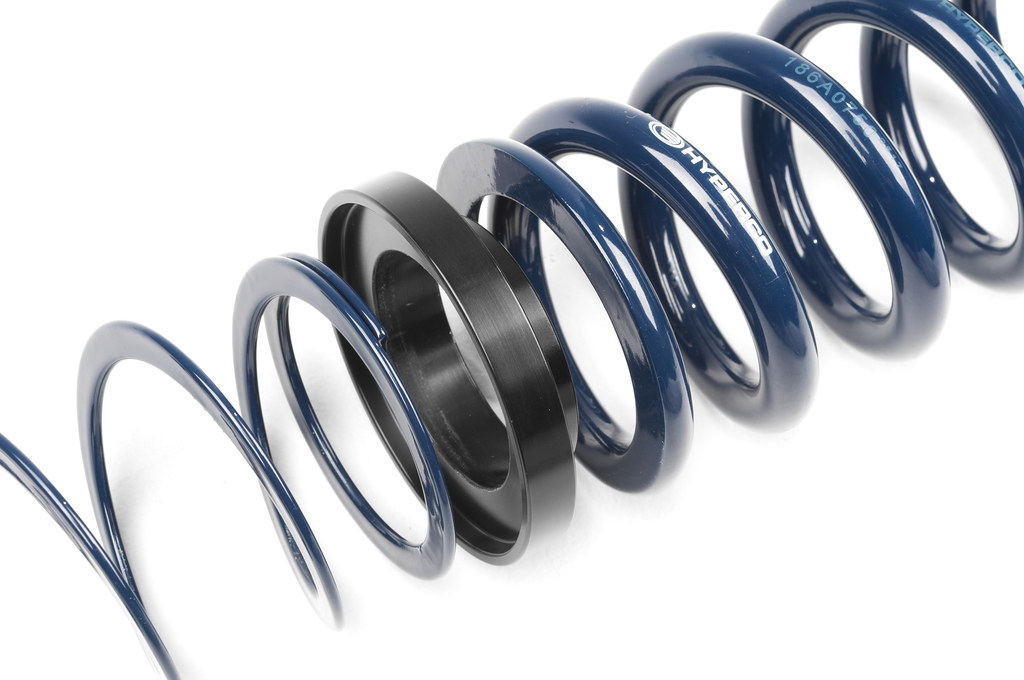
It's all in the details. Our helper spring adapters are designed to minimize stack height at all costs. Using a recessed mounting pad adds less than 1/4" to the overall height of the setup, while precisely matching the diameters of both springs and not allowing any play.

Image hosted on: c1.staticflickr.com