Quote:
Originally Posted by Yugo

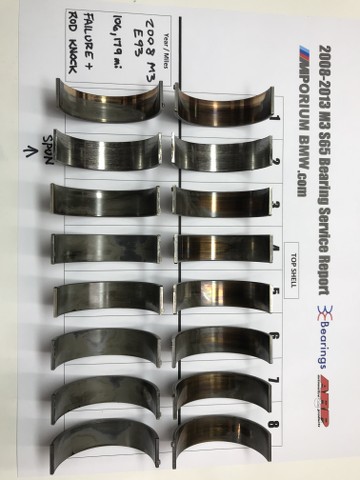
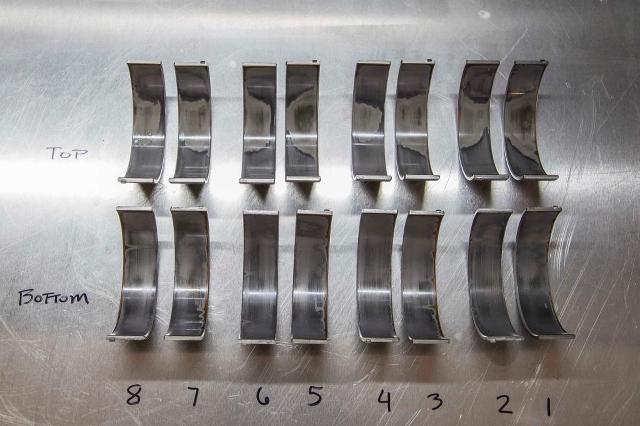
Can someone please shed some light here for me. What makes both of those sets of bearings bad and puts them at risk of failure soon? To me they look worn out, but there's plenty of metal left. Also how does wear of ones bearings correlate to failure on cars that had theirs fail at a low mileage?
Firm believer here that this whole thing is blown way out of proportions and vendors as well as shops are taking full advantage of it. Yes, there's failures, but I don't think sets pictured here are those.
|
The entire bearing shell is not wearable material. You cannot simply look at a bearing and determine how much more "meat" there is. The shell's structural component is steel. The babbit (dissimilar wear surface) is lead/copper or tin/aluminum. The crank is steel. Once the very thin babbit layers wear down, these similar metals weld together and you get a spun bearing. Many bearings spin well before that while the crank is riding on the exposed copper. Engines fail due to one failed bearing. They don't all seize up at once. Failed engines usually have seven journals that look exactly like the OP's, except for one cylinder (or main) which spun and shows visible copper or steel.
It has been said hundreds of times over...You Can't know when your bearings are going to fail. You can't look at a used bearing and say "yep, that one was only good for another 4,296 miles"... All you can do is go through with the service and move on with the peace of mind. The general consensus as to why some fail early and some later is unfavorable vs favorable tolerance stacking.
Yes, I'm a believer because I run a shop and have a finger on the pulse of the issue. And that's not because I get money to replace abnormally worn bearings, but because I see the huge number of failures which are astronomically out of normal proportion. It's a thing. It's not normal. Owners can believe it or not, it doesn't matter to us shops. Consider how many failures have been averted by owners changing their bearings? I guarantee you that if nobody ever did another bearing change ever, then we'd stay just as busy selling more replacement engines instead.

FYI, this engine was obviously built with a favorable tolerance stack. This is how bearings should look coming out of an S65 (of any mileage):
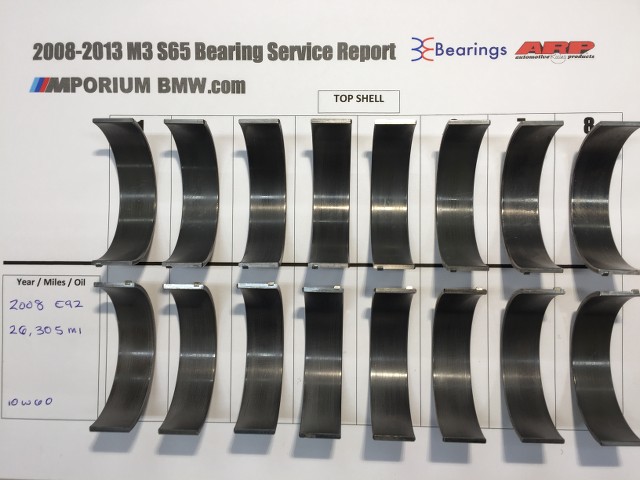
Instead, we constantly see them coming out like this: