1.1MVIEWS
232REPLIES
745APPRECIATES
07-24-2026LAST POST
Video: https://redd.it/1kxrj6f

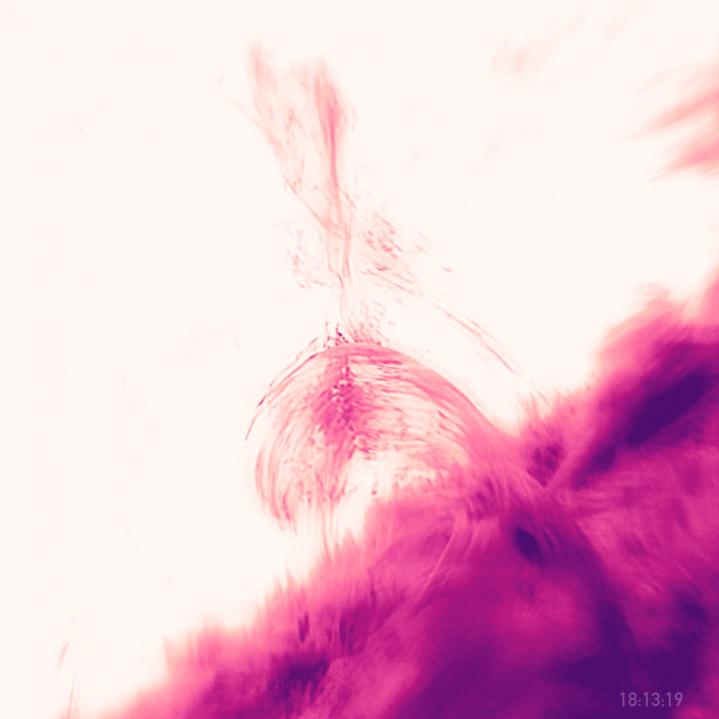
Scientists from the U.S. National Science Foundation National Solar Observatory and New Jersey Institute of Technology produced the finest images of the Sun’s corona to date.

To make these high-resolution images and movies, the team developed a new ‘coronal adaptive optics’ system that removes blur from images caused by the Earth’s atmosphere.

Their ground-breaking results were recently published in Nature Astronomy and pave the way for deeper insight into coronal heating, solar eruptions, and space weather, and open an opportunity for new discoveries in the Sun’s atmosphere.

Credit: Schmidt et al./NJIT/NSO/AURA/NSF
Attached image
On October 3, 2018, Japan's Hayabusa2 mission dropped the MASCOT lander onto asteroid Ryugu. After bouncing off a boulder, it tumbled 55 feet and landed in a shadowed crater. This image shows Ryugu's rugged, primitive surface-rich in carbonaceous materials. Captured before MASCOT's battery died, it provides rare insight into untouched asteroid geology.
Source: Jaumann et al. (Science, 2019) | Image via German Aerospace Center (DLR) & Gizmodo
Attached image
Gif: https://redd.it/1lauwl2

A supernova explosion that happened in Centaurus A galaxy. This animation represents about 1.5 years of time, omitting the first frame which is a legacy image from 2010. This all happened a bit more than one month after the initial explosion.
What you see here is the fading of the supernova, and then the blueish ring that is a light echo that began to propagate outwards immediately after the initial explosion.
Credit: NASA/STScI/Judy Schmidt
Attached image
NASA has released dramatic color images this year of Jupiter and Venus.:cool!:
Attached imageAttached image
Observations using the James Webb Space Telescope have picked up a possible marker of biologic activity on the planet K2-18b. K2-18b is in our galaxy and orbits a red dwarf star, although it is 124 light-years from Earth. It may be a water/watery planet and the marker in question is dimethyl sulfide, which on our own planet is a product of the decay of marine phytoplankton. K2-18b is not directly observable from Earth.

Attached image
Llarry wrote
Observations using the James Webb Space Telescope have picked up a possible marker of biologic activity on the planet K2-18b. K2-18b is in our galaxy and orbits a red dwarf star, although it is 124 light-years from Earth. It may be a water/watery planet and the marker in question is dimethyl sulfide, which on our own planet is a product of the decay of marine phytoplankton. K2-18b is not directly observable from Earth.
One day we will discover that life is everywhere, I bet.
dumptruck wrote
Llarry wrote
Observations using the James Webb Space Telescope have picked up a possible marker of biologic activity on the planet K2-18b. K2-18b is in our galaxy and orbits a red dwarf star, although it is 124 light-years from Earth. It may be a water/watery planet and the marker in question is dimethyl sulfide, which on our own planet is a product of the decay of marine phytoplankton. K2-18b is not directly observable from Earth.
One day we will discover that life is everywhere, I bet.
I agree. It may just be slime -- or super-intelligent.
"ESA’s Euclid captures the Milky Way’s crowded heart"
ESA - 24/06/2026
https://www.esa.int/Science_Exploration/Space_Science/Euclid/ESA_s_Euclid_captures_the_Milky_Way_s_crowded_heart

In brief
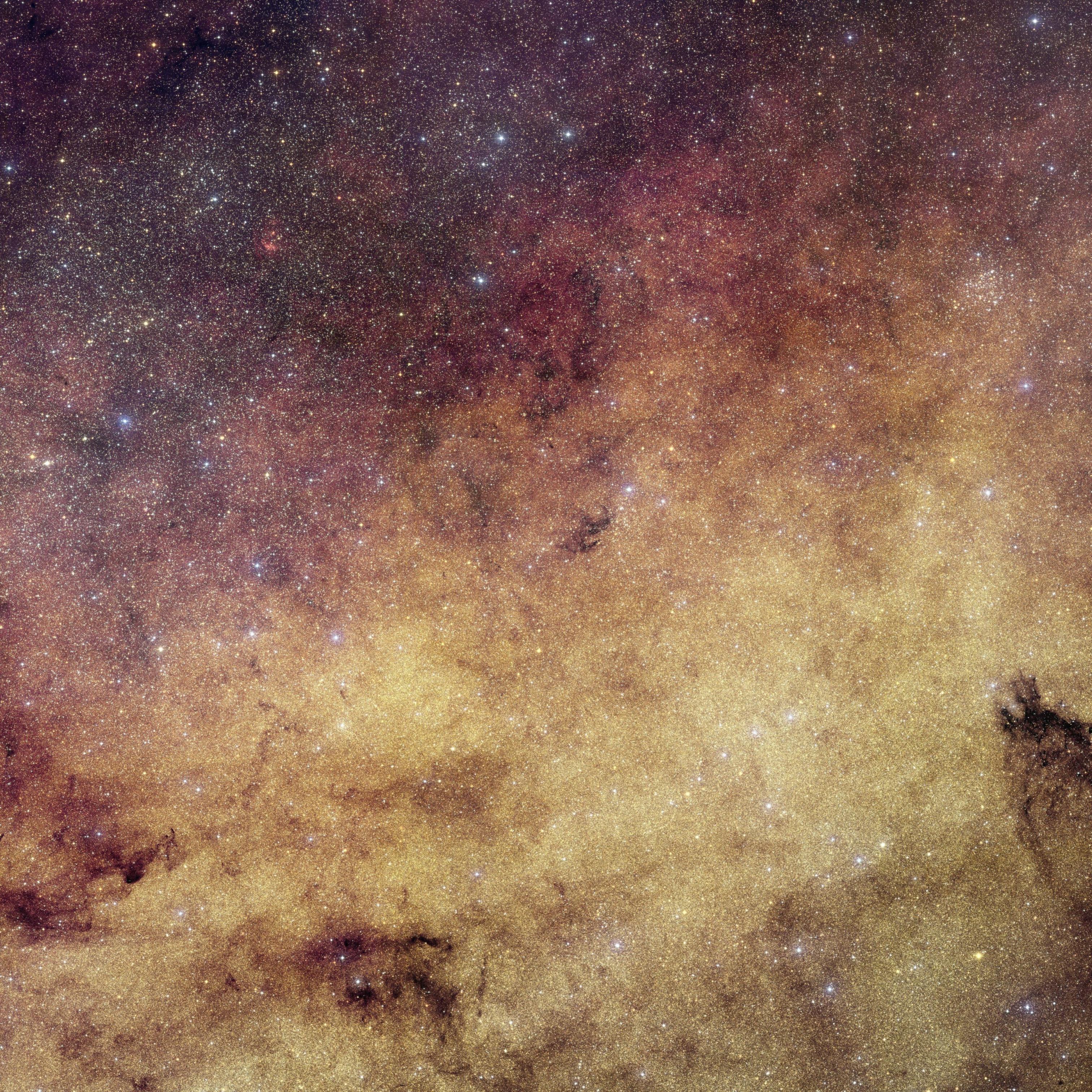
The largest and most detailed photo ever made of our Milky Way galaxy’s centre in visible light is revealed today [24 June 2026] by the European Space Agency’s Euclid mission. Packed with more than 60 million stars, this image opens the door for scientists to confirm the existence of any exoplanet found in this region and measure its mass using tiny changes in starlight over time.
Attached image

This is the largest high-resolution photo ever made of our Milky Way galaxy’s centre in visible light. It was taken on 23 March 2025 by the European Space Agency’s Euclid space telescope. Packed with more than 60 million stars, this image opens the door for scientists to confirm the existence of any exoplanet found in this region and measure its mass using tiny changes in starlight over time.
The galactic bulge – the central region of our galaxy – is a vast, tightly packed structure filled mainly with old, cooler stars, giving it its characteristic yellow colour. Seen from some 26 000 light-years away, Euclid observes the galaxy’s centre through a complex foreground of material along its line of sight.
This ultra-wide view towards the bulge reveals not only stars, but also seemingly empty dark regions. The dark patches are not devoid of stars: they mark dense, dust-rich molecular clouds that absorb and scatter light from the bulge behind them. As Euclid looks through two of the Milky Way’s spiral arms, it also encounters regions of active star formation, traced by newly formed, massive blue stars. Their intense ultraviolet radiation ionises surrounding hydrogen gas, producing the faint red glow clearly visible in one of the cutouts.

[Image description: A dense field of tiny stars fills this square image taken by the European Space Agency’s Euclid space telescope. The lower and central areas are dominated by bright yellow and gold colours, forming a textured background similar to fine glitter or sand. Dark brown and black patches cut irregularly through the yellow regions, like ink stains or clouds of smoke. Toward the upper left, the colours shift to purple and reddish tones, blending gently into the surrounding star field. Small blue points of light are scattered across the image.]

Technical details:
The Euclid galactic bulge survey was conducted in early 2025 using Euclid’s optical camera VIS (monochromatic, one colour). These are first and foremost Euclid images, defined by Euclid’s crisp resolution and spectacularly wide field of view; the colours were added using observations captured in the summer of 2025 with the Canada-France-Hawai'i Telescope's MegaCam camera (CFHT-Megacam) in Hawai’i. The colours captured by MegaCam are in optical light through three broad-band filters (u, g, and r) overlapping the very broad VIS band over the r-band. The appearance of the most luminous stars in these images looks different than those generated from Euclid-only images, with additional diffraction spikes and a subtle halo around the very bright stars. This a consequence of combining Euclid VIS data, for their sensitivity and sharpness, and CFHT-MegaCam for the colours. Subtle differences in optical design of the two telescopes become apparent for the brighter objects.
Amazing mind boggling facts:

Voyager 1 is not even close to halfway out of our galaxy. After traveling for nearly 50 years, the probe has barely left our immediate cosmic neighborhood.
Where it is now:
  • Distance traveled: Voyager 1 is about 170 Astronomical Units (AU) from Earth. This equates to roughly 16 billion miles, or about 25.8 billion kilometers.
  • Cosmic scale: This distance means it takes a radio signal traveling at the speed of light about one day to reach the spacecraft.
How big the Milky Way is:
  • The Milky Way is approximately 100,000 light-years in diameter.
  • A light-year is the distance light travels in a full year (roughly 5.8 trillion miles).
Put another way, the furthest human-made object has covered only about \(0.002\) of a single light-year. To travel even one light-year at its current speed of 38,000 mph (17 km/s), Voyager 1 would need roughly 17,000 years.
Will it leave the galaxy?
Voyager 1 will never leave the Milky Way. It doesn't have the velocity to escape our galaxy's gravitational pull. Instead, it will drift as a ghost ship, quietly orbiting the center of the galaxy forever.
Attached image
The most amazing and mind-boggling fact is that I was in Florida in 1977 and actually saw Voyager 2 launch! (Voyager 1 launched about two weeks later.)

Get off my lawn, kid!!!!!
Via Galactica - Galaxy - Milky Way

"When you look up at the night sky, most of the stars you see are in one of the Milky Way arms. Before we had telescopes, people could not see many of the stars very clearly. They blurred together in a white streak across the sky. A myth by the ancient Greeks said this white streak was a "river of milk". The ancient Romans called it the Via Galactica, or "road made of milk". This is how our Galaxy became known as the Milky Way."
https://imagine.gsfc.nasa.gov/science/featured_science/milkyway/

"Heracles (Hercules), it is told, was born to Zeus following one of his many infidelities. To grant him protection and superhuman powers, Hermes snuck Heracles up to Olympus and placed him at Hera’s breast as she slept. But when Zeus’s wife woke up and realized what had happened, she flung the baby from her breast and some of her milk spilled out across the heavens. Hence the Greek term kuklos galaxías (κύκλος γαλαξίας), or “milky circle.”"
https://thereader.mitpress.mit.edu/the-myths-and-lore-of-the-milky-way/

Attached image
To celebrate the 50th birthday of the Viking 1 touchdown on Mars (July 20, 1976), launched on August 20, 1975.

"This photo from NASA’s Curiosity rover shows the Earth as seen from the surface of Mars, shining brighter than any star in the Martian night sky. Earth is the bright point of light a little left of the image’s center and our moon can be seen just below Earth. Curiosity, which landed on the red planet on August 6, 2013, is the largest and most advanced rover ever sent to Mars. It studies the geology of its surroundings and has found evidence of a past environment well-suited to support microbial life.
Researchers used the left-eye camera of Curiosity's Mast Camera (Mastcam) to capture this scene about 80 minutes after sunset on the 529th Martian day, or sol, of the rover's work on Mars (January 31, 2014). The image has been processed to remove cosmic-ray effects. A human observer with normal vision, if standing on Mars, could easily see Earth and the moon as two distinct bright evening ‘stars’. When Curiosity took the photo, Earth was about 99 million miles (160 million kilometers) from Mars.
This picture adds to our collection of photos of planet Earth from afar, giving a unique perspective to our place in the cosmos."

https://science.nasa.gov/resource/earth-from-mars/

Attached image

Trivia: a round-trip mission to Mars takes roughly 2 to 3 years (about 500 to 1,000 days) in total. This extended duration is due to orbital mechanics, which require spacecraft to wait for planetary alignment before returning:
  • outbound journey: 6 to 9 months of space travel to reach Mars;
  • surface stay: 13 to 16 months (roughly 500 days) waiting on the Martian surface for Earth and Mars to perfectly align for the return trip;
  • return journey: 6 to 9 months to travel back to Earth.
The newly discovered Beta Pectoris d,
  • Mass: 2.4 times the mass of Jupiter (about 763 Earth masses).
  • Radius: 1.26 times the radius of Jupiter (about 14.1 Earth radii).
  • Orbital Distance: 26 AU from the star (26 times the distance from Earth to the Sun).
  • Orbital Period: 91 years to complete one trip around the star
Artist rendering: The planet is on the right.
Attached image